Paver Patio vs. Wood Deck: Which Adds More Value in Savannah?
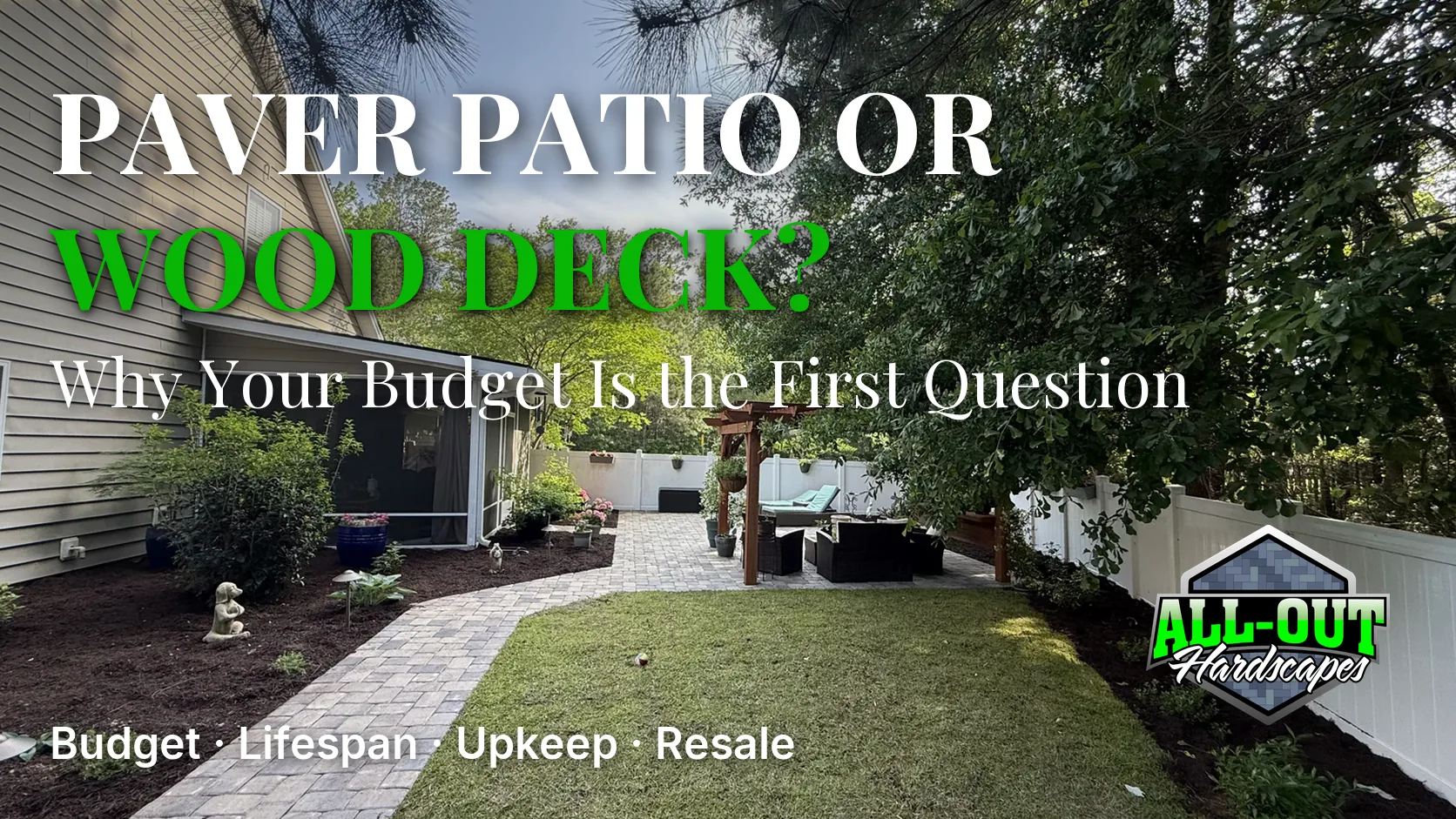
Neither adds value on its own. The first question is your budget, and at $3,000 to $4,000 a basic wood deck is often the honest answer.
Read MoreHonest guides on costs, materials, maintenance, and more — so you can make the best decision for your home.

Neither adds value on its own. The first question is your budget, and at $3,000 to $4,000 a basic wood deck is often the honest answer.
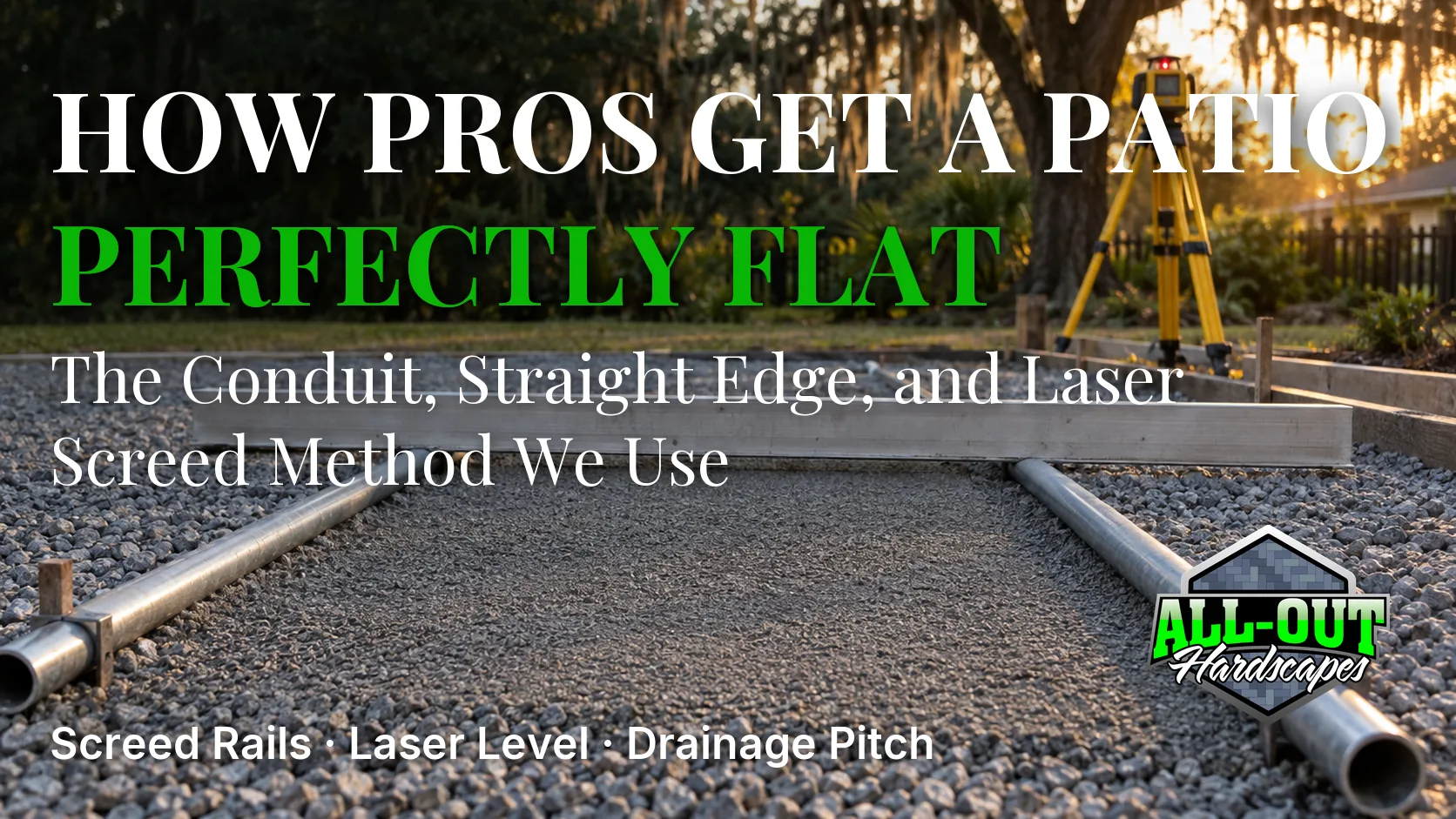
Read MoreSteel conduit rails set by laser, an aluminum straight edge pulled across them, done twice. And why perfectly flat still means pitched for drainage.
Read MoreFrom a one-day small patio to a two-week custom backyard, plus why the start date is its own timeline and why big jobs carry an extra week.
Read MoreSend the pins you have saved, have the person with the idea at the visit, and bring a budget range. We bring the Techo-Bloc book already marked.
Read MoreAbout $25 to $35 a square foot, turnkey: pavers, base, joint sand and labor in one price. Here is what moves a walkway up or down that range.
Read MoreSummer is our slow season, spring books up first, and a patio started in the heat is finished in time for fire-pit weather.
Read MoreFour decisions make a backyard ready for fall: who will be out there, where the fire sits, how the walk back is lit, and which way the seats face.
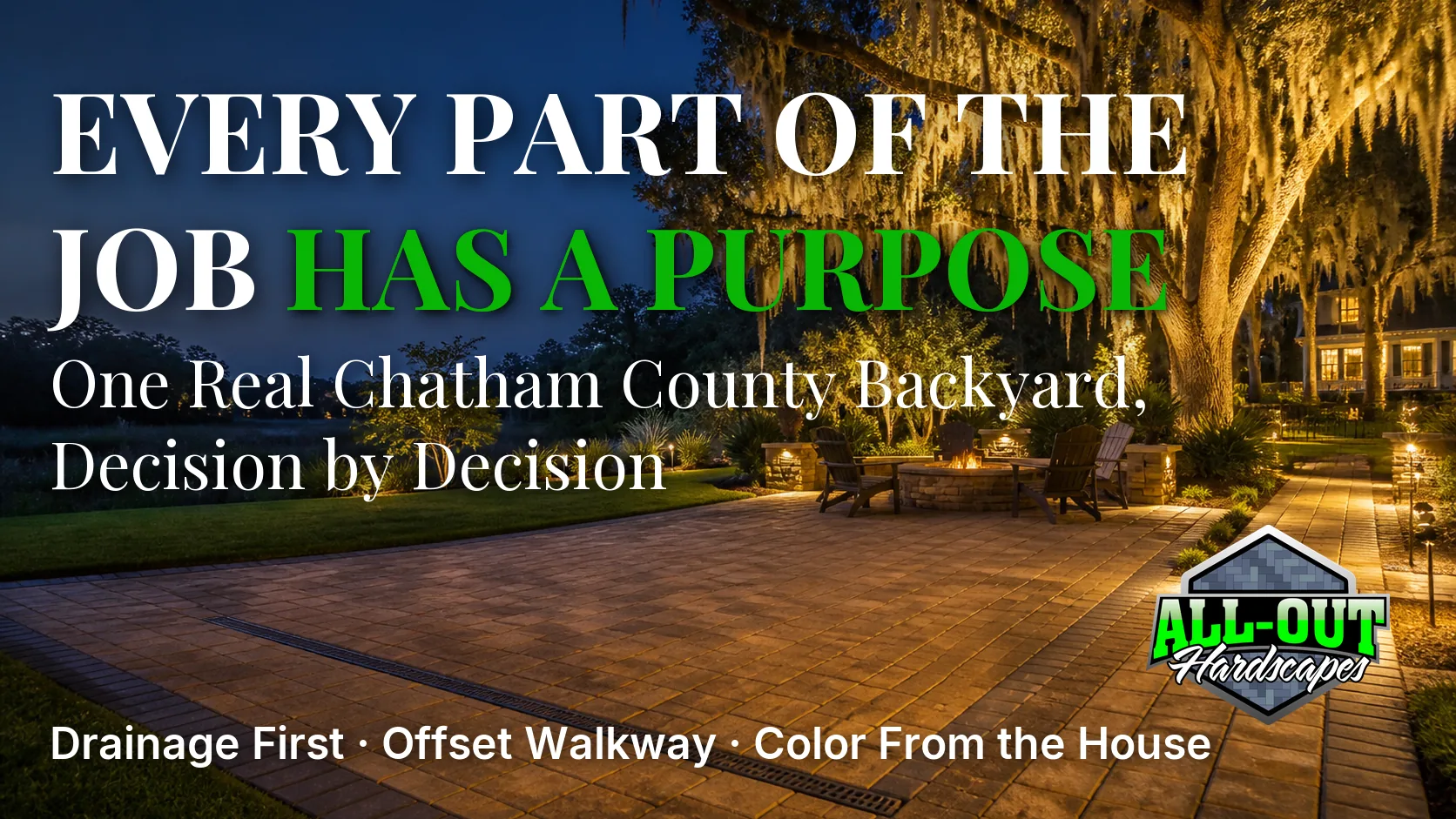
Read MoreOne real Chatham County backyard, walked through decision by decision: the drainage, the offset walkway, the paver color pulled from the house itself.
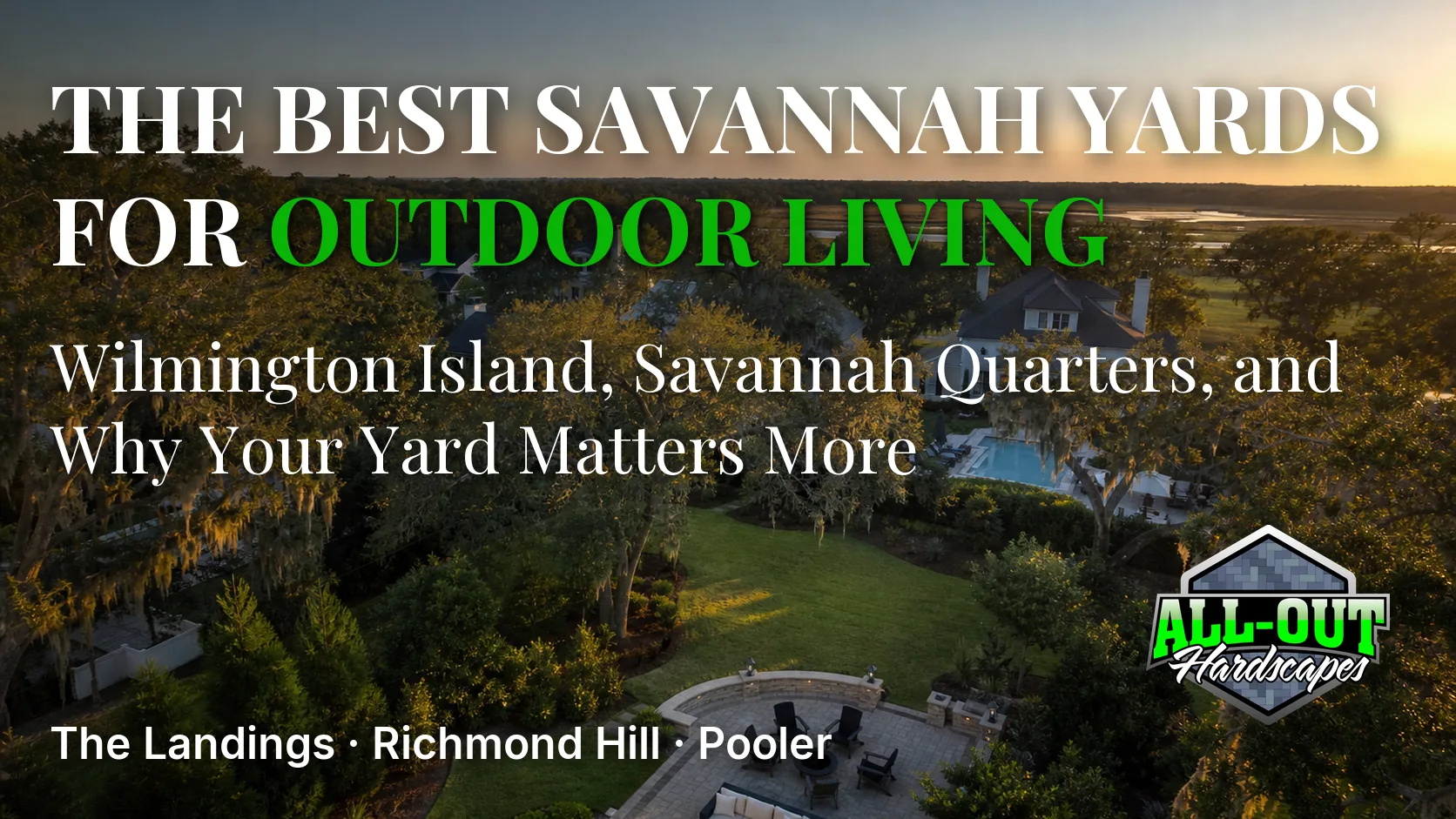
Read MoreWilmington Island and Savannah Quarters lead by a wide margin — but what is under your grass and where the water goes matter more than your zip code.
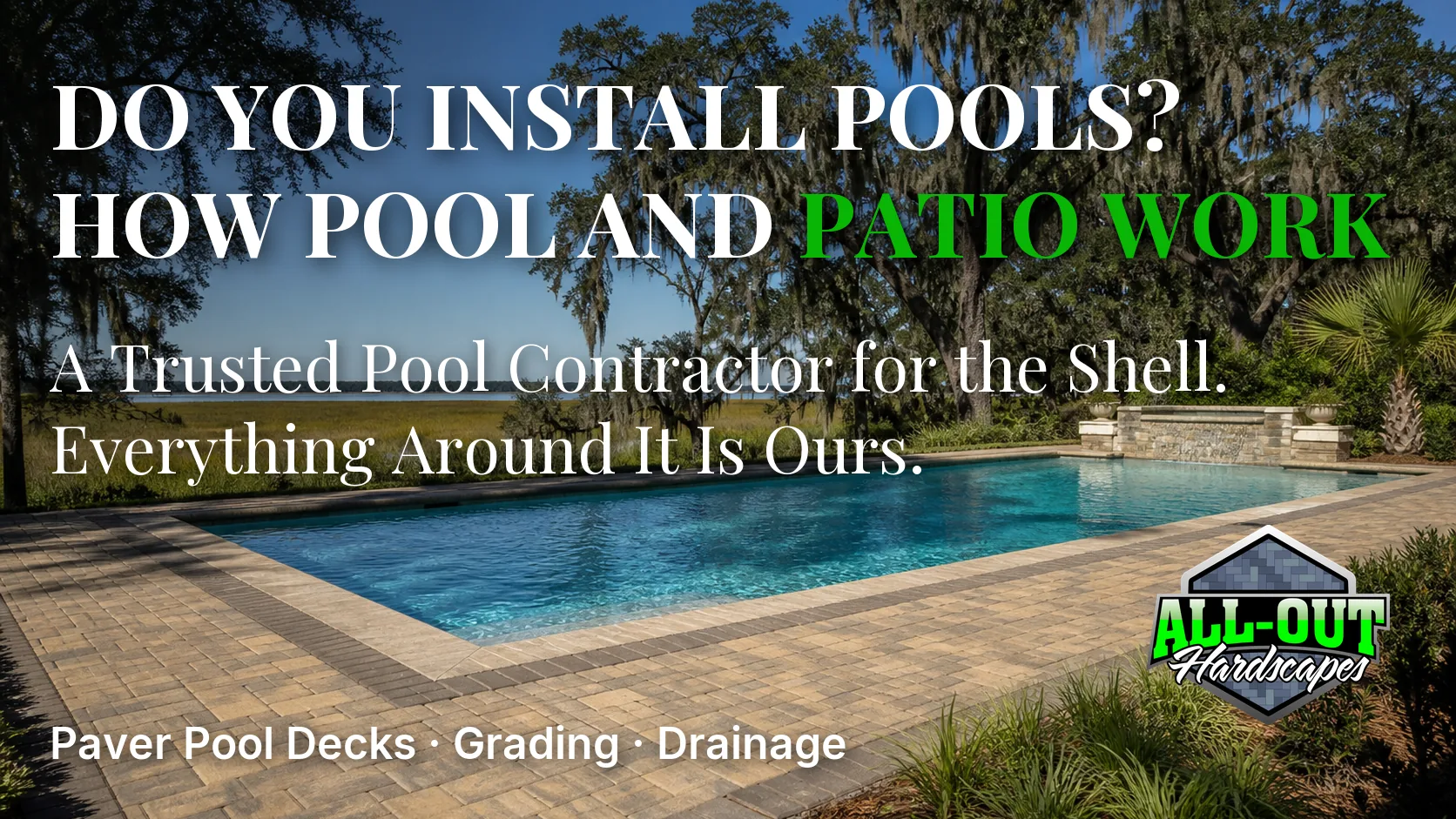
Read MoreYes, with one qualifier on the record: a trusted pool contractor sets the shell. The grading, base, paver deck, drainage and lighting are ours.
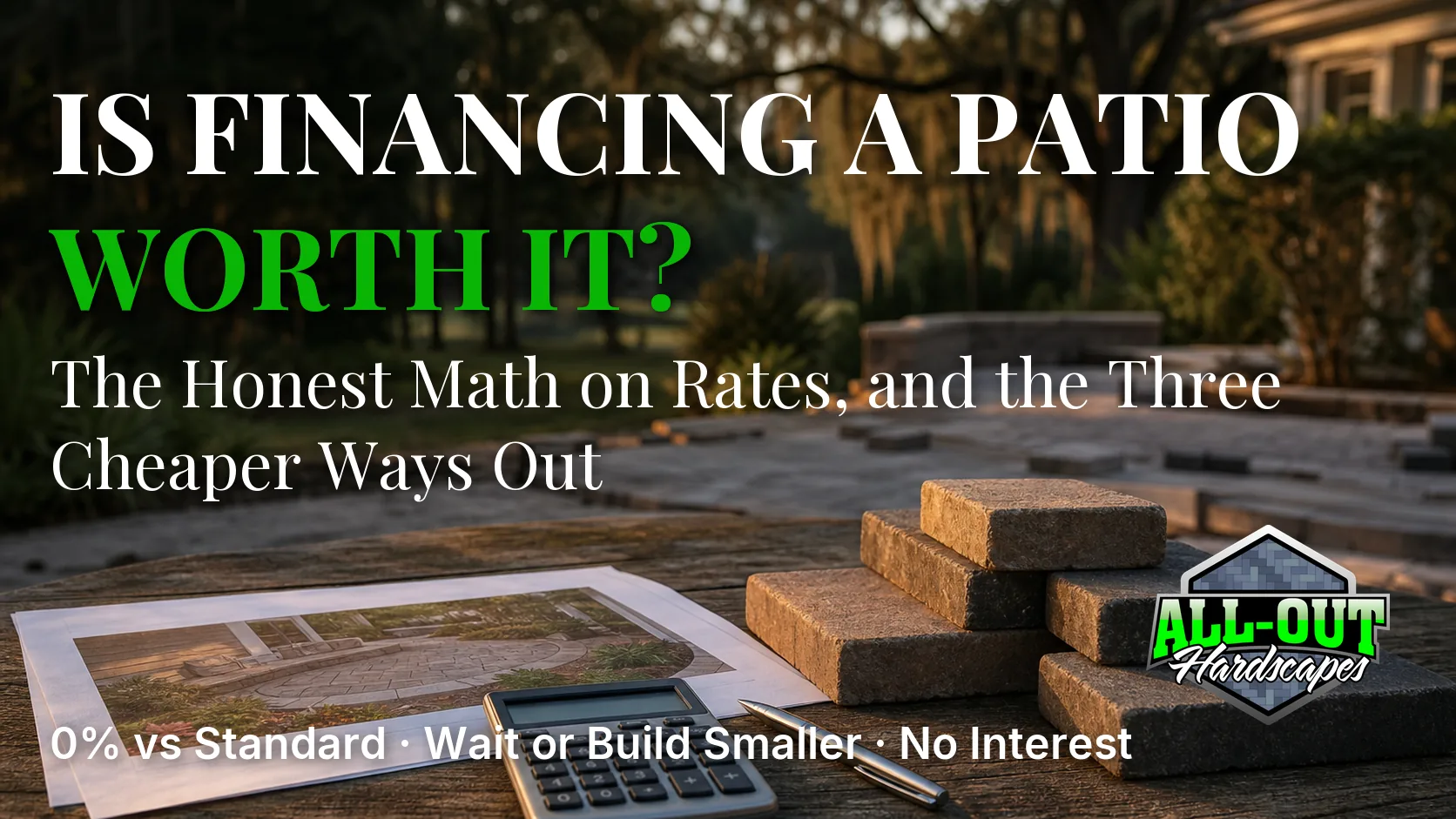
Read MoreThe honest math on 0% versus standard rates — and the three cheaper ways out that we would rather you consider first.
Read MoreA telescoping boom reaches about eight feet past where the machine is parked, which is how a pallet of pavers gets to your backyard without driving across your lawn.
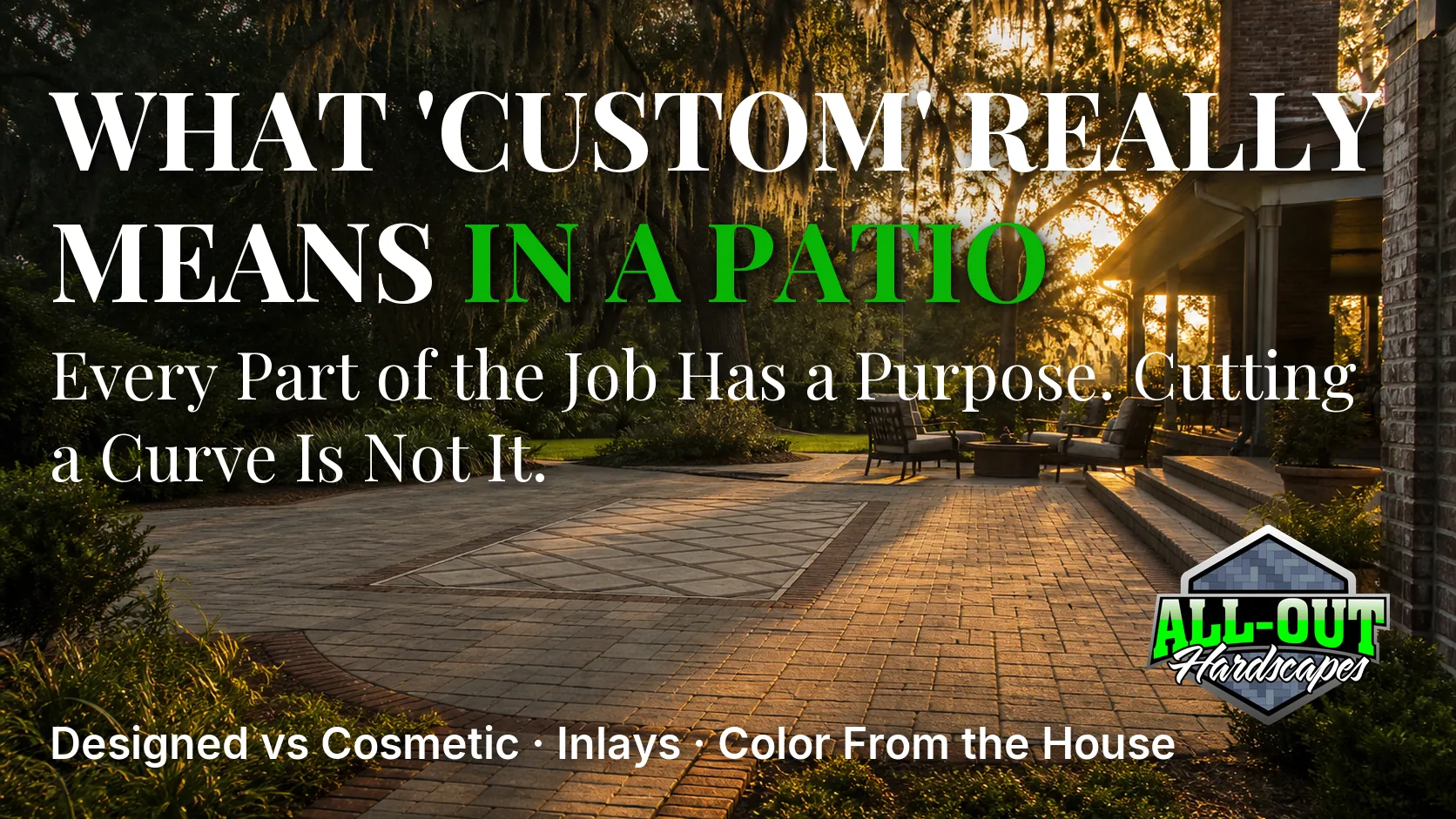
Read MoreEvery part of the job has a purpose. That is the whole definition — and by that standard, cutting one curve into a rectangle is not custom.
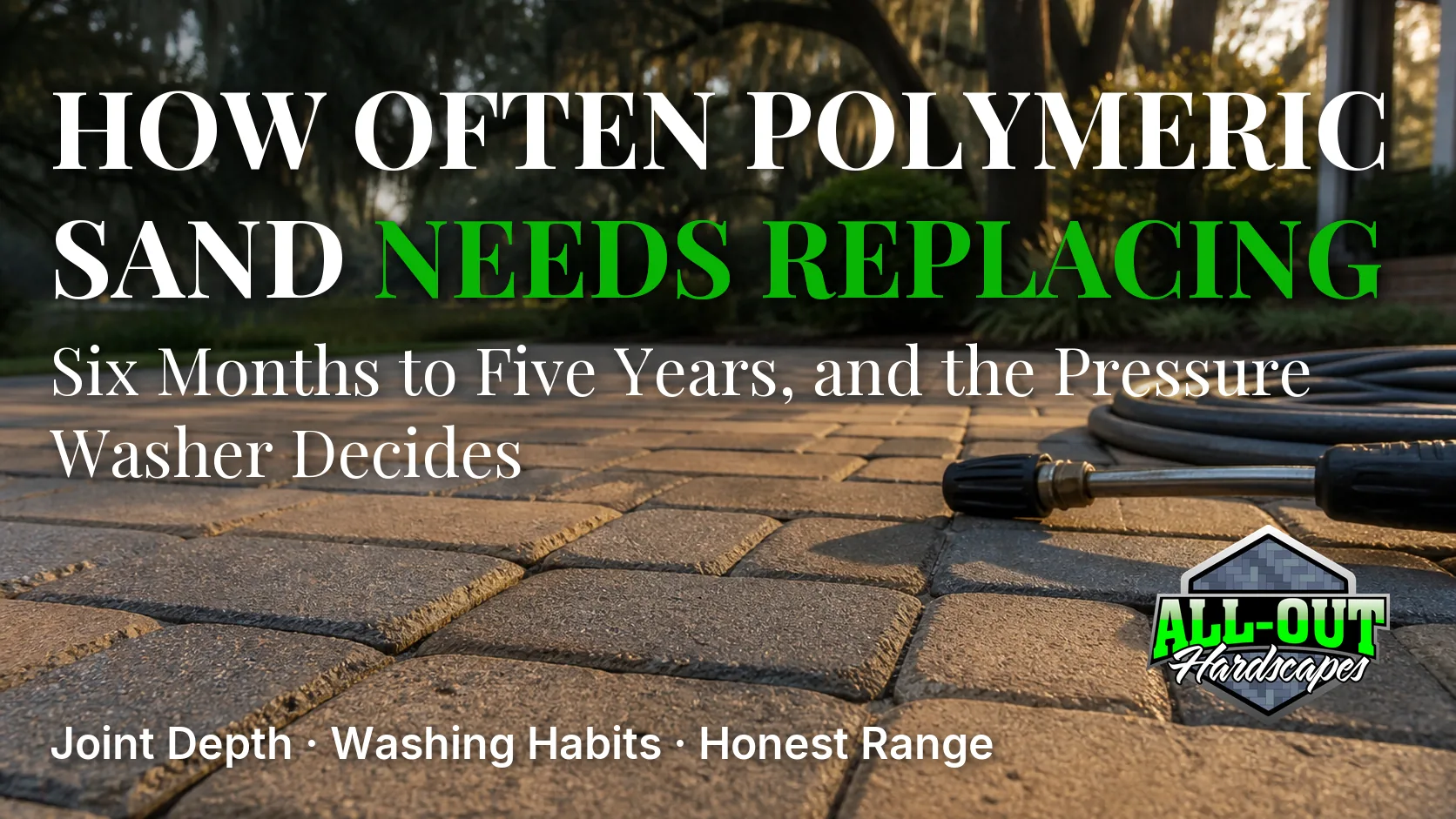
Read MoreSomewhere between six months and five years, and how you wash the patio decides which end of that range you land on.
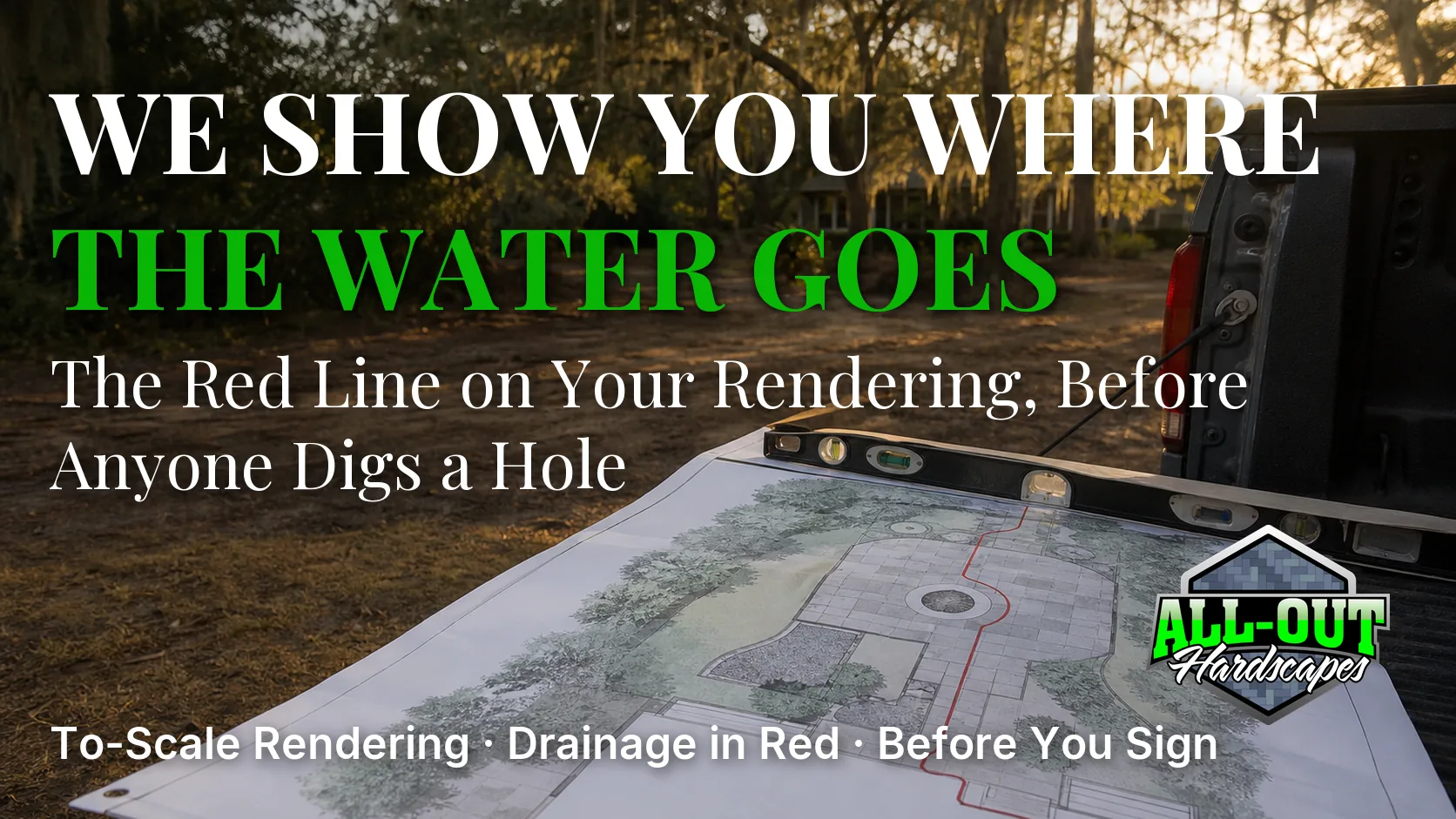
Read MoreYou should not have to trust us on drainage. On our drawings the water path is drawn in red, so you can trace it with your finger before anyone digs.
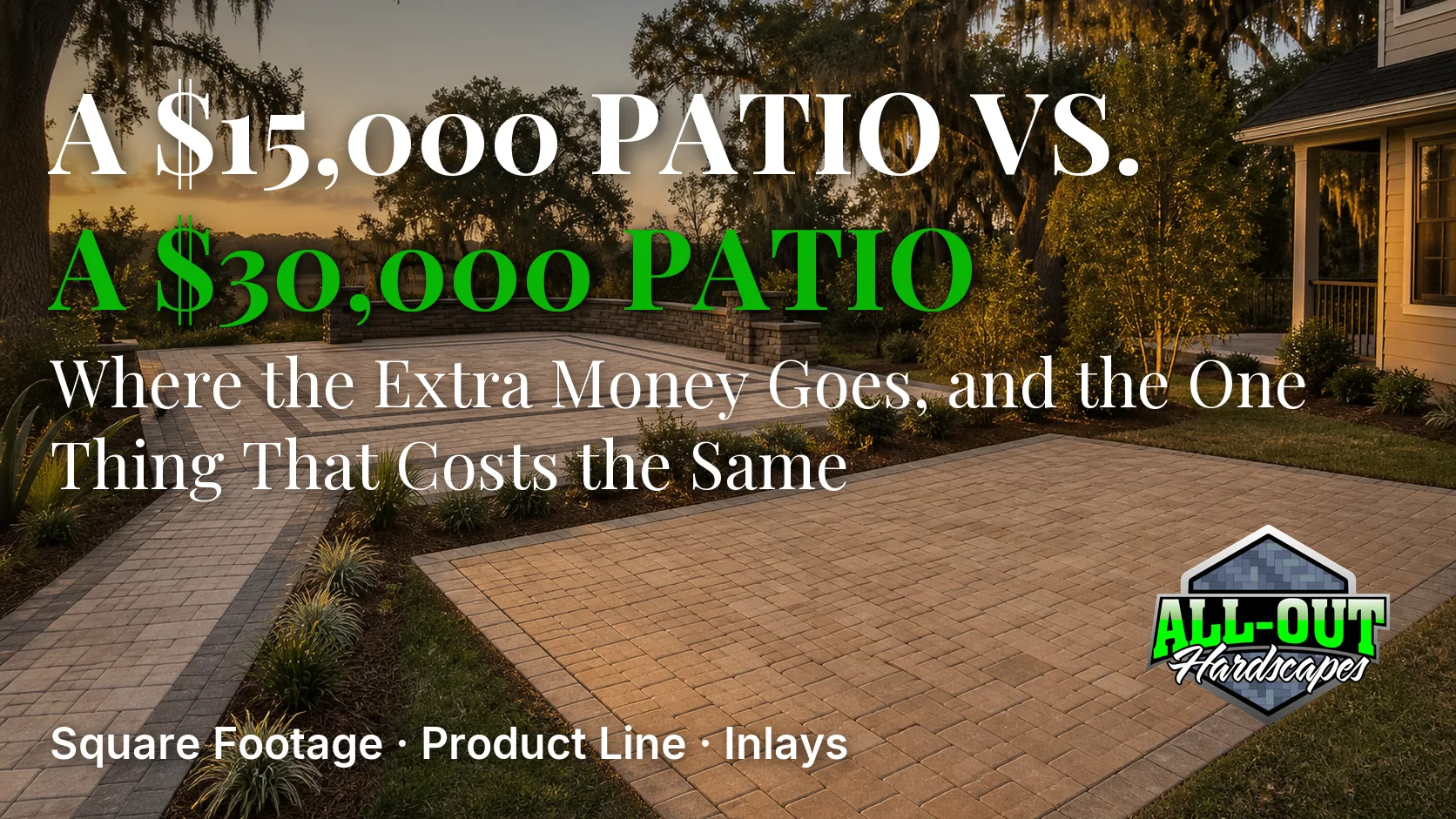
Read MoreFive things separate these two numbers, and the base is not one of them. That costs the same either way, because it is the one place we will not cut.
Read MoreNo. Not permanently — and anyone promising you zero weeds is either selling something very expensive or not being honest with you.
Read MoreThe honest installed range in Savannah, and why a $6 paver price is not the number you will actually pay. Most of the cost is under the stone.
Read MorePull the pavers off a patio that failed early and the bedding layer is sand, sitting on dirt with no real base under it — that is where the money went.
Read MoreAsk to see where the water goes before anyone digs. A real design consult shows up with the county survey, marks the drainage, and puts an actual paver in your hand.
Read MoreLighting first, then the fire pit, then the seat wall. That order buys the most usable evenings per dollar — and a wheel-in grill area beats a full outdoor kitchen for most families.
Read MoreHalf down, half at completion. The deposit buys the materials sitting in your driveway — and anyone asking for the whole thing before a shovel moves is a red flag.
Read MoreA per-square-foot paver price covers the paver. That is all. The base, the buried surprises, and the lawn repair are where a low quote quietly gets its money back.
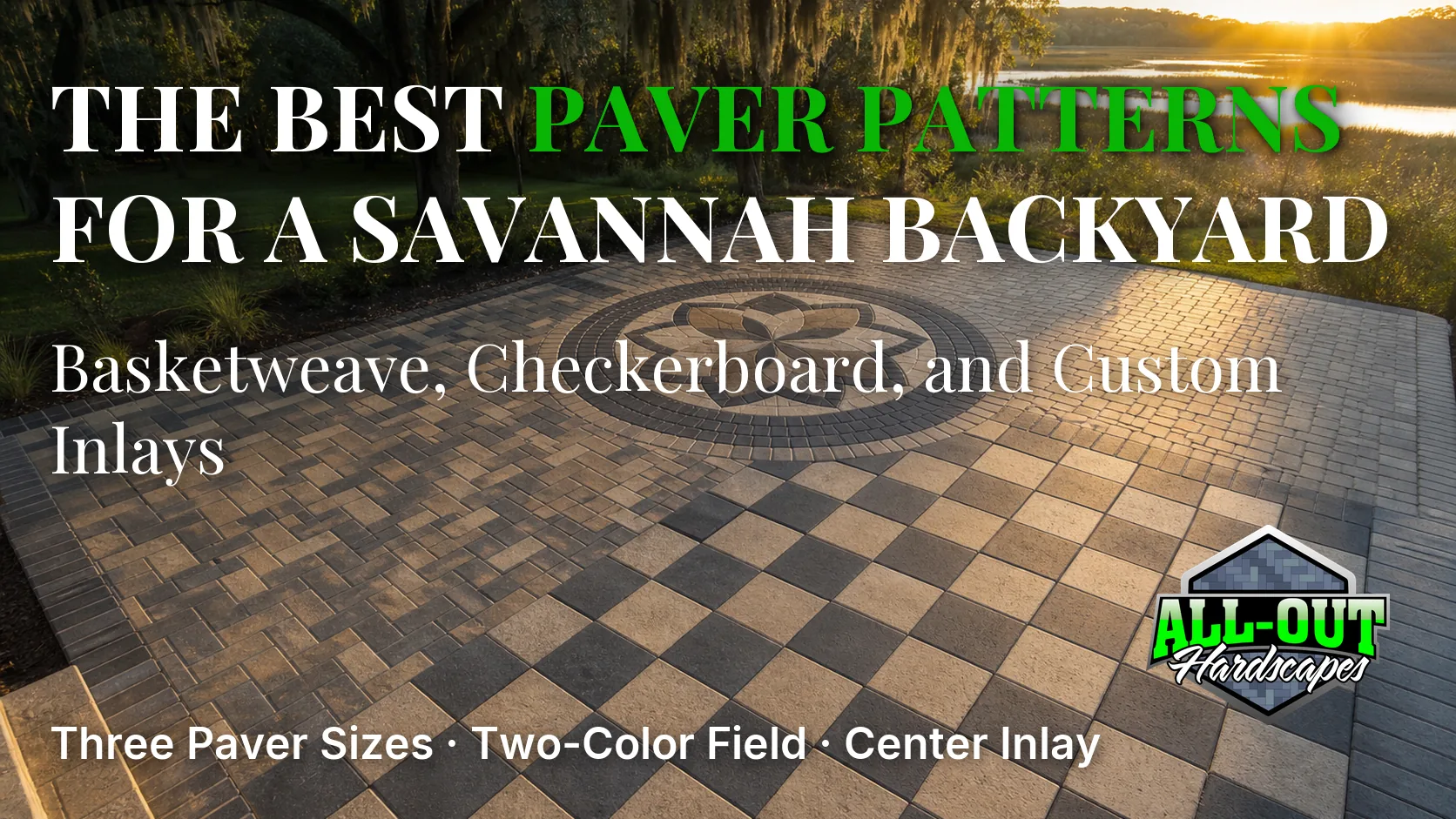
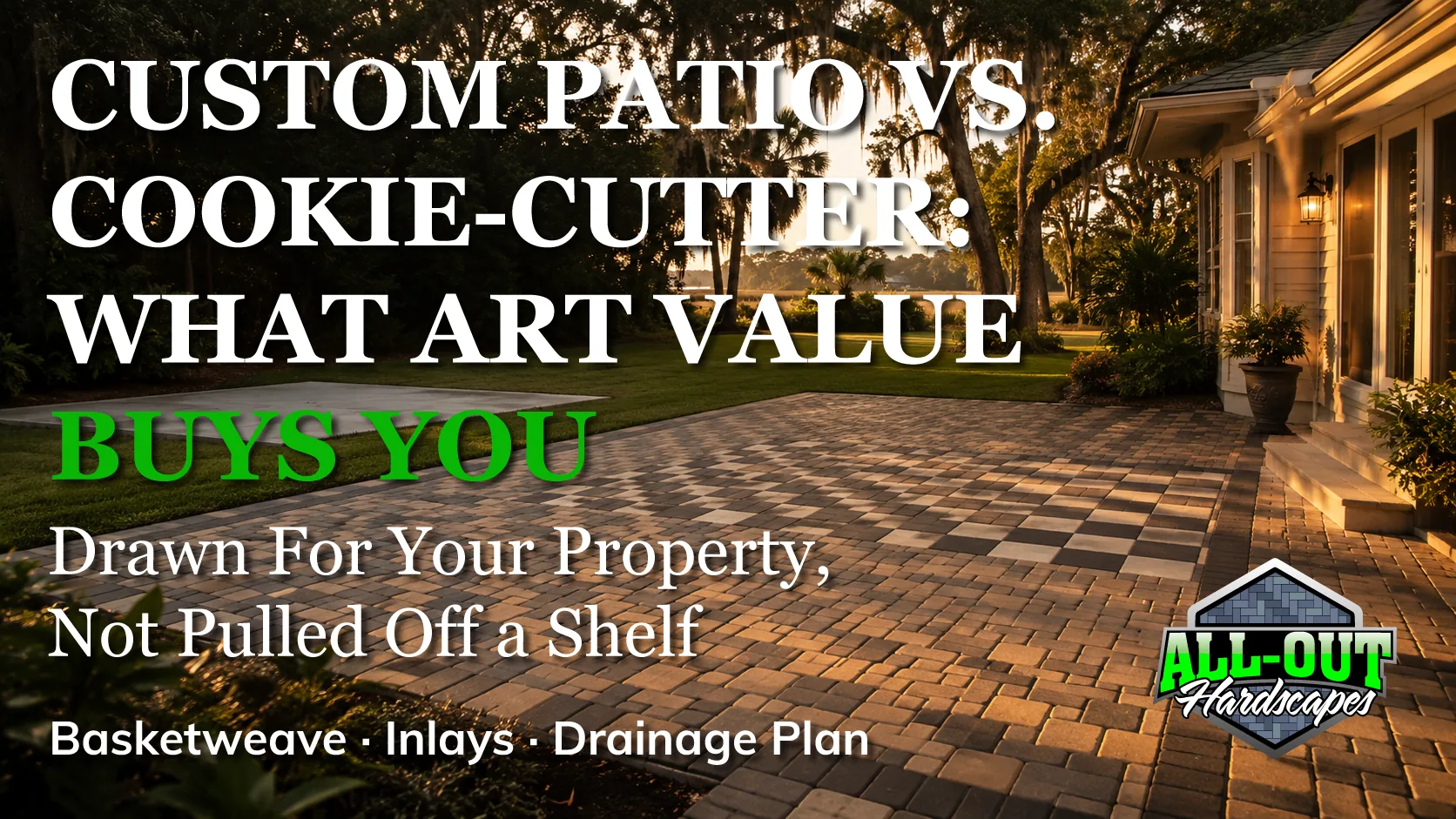
Read MoreBasketweave built from three paver sizes, a two-color checkerboard field, and a center inlay. The pattern is what makes a patio yours instead of the same rectangle as everyone else.
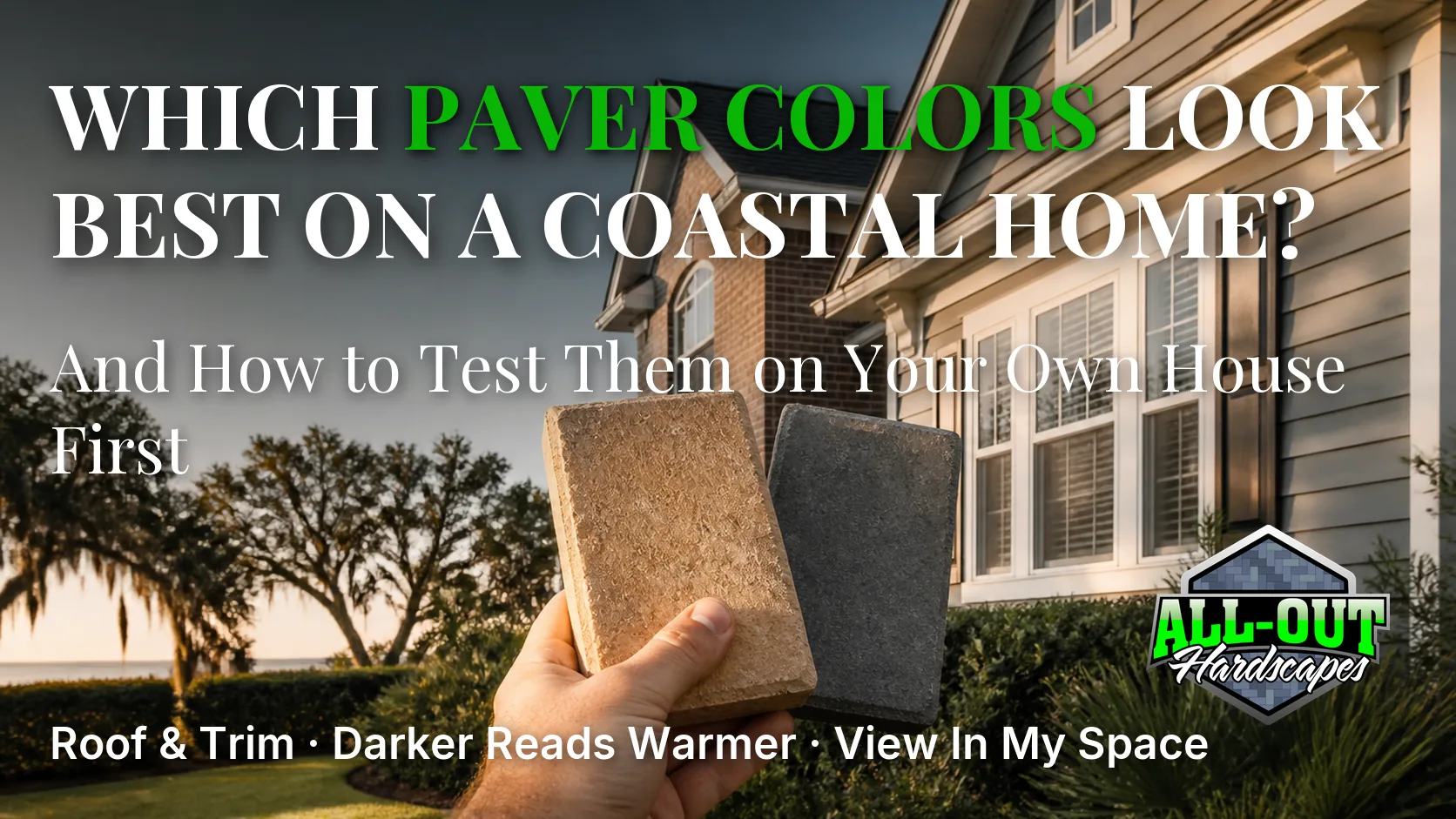
Read MorePull your color from the roof and the trim, not the siding. Darker pavers read warmer in Lowcountry light — and you can test the whole thing on your own house before you commit.
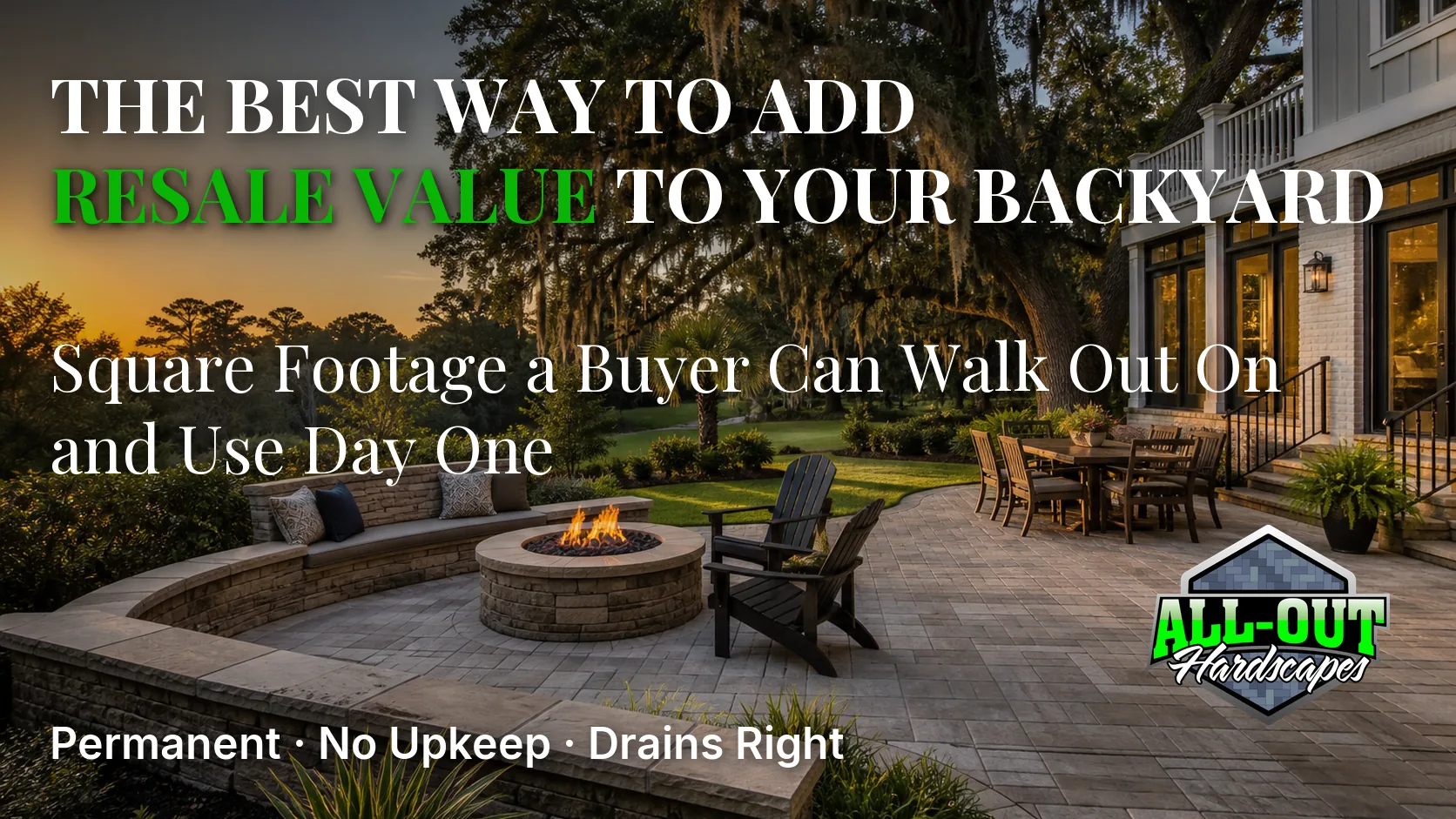
Read MorePermanent, usable square footage a buyer can walk out onto and use on day one. Cosmetic work that needs sanding, staining, or replacing on a schedule does not add value.
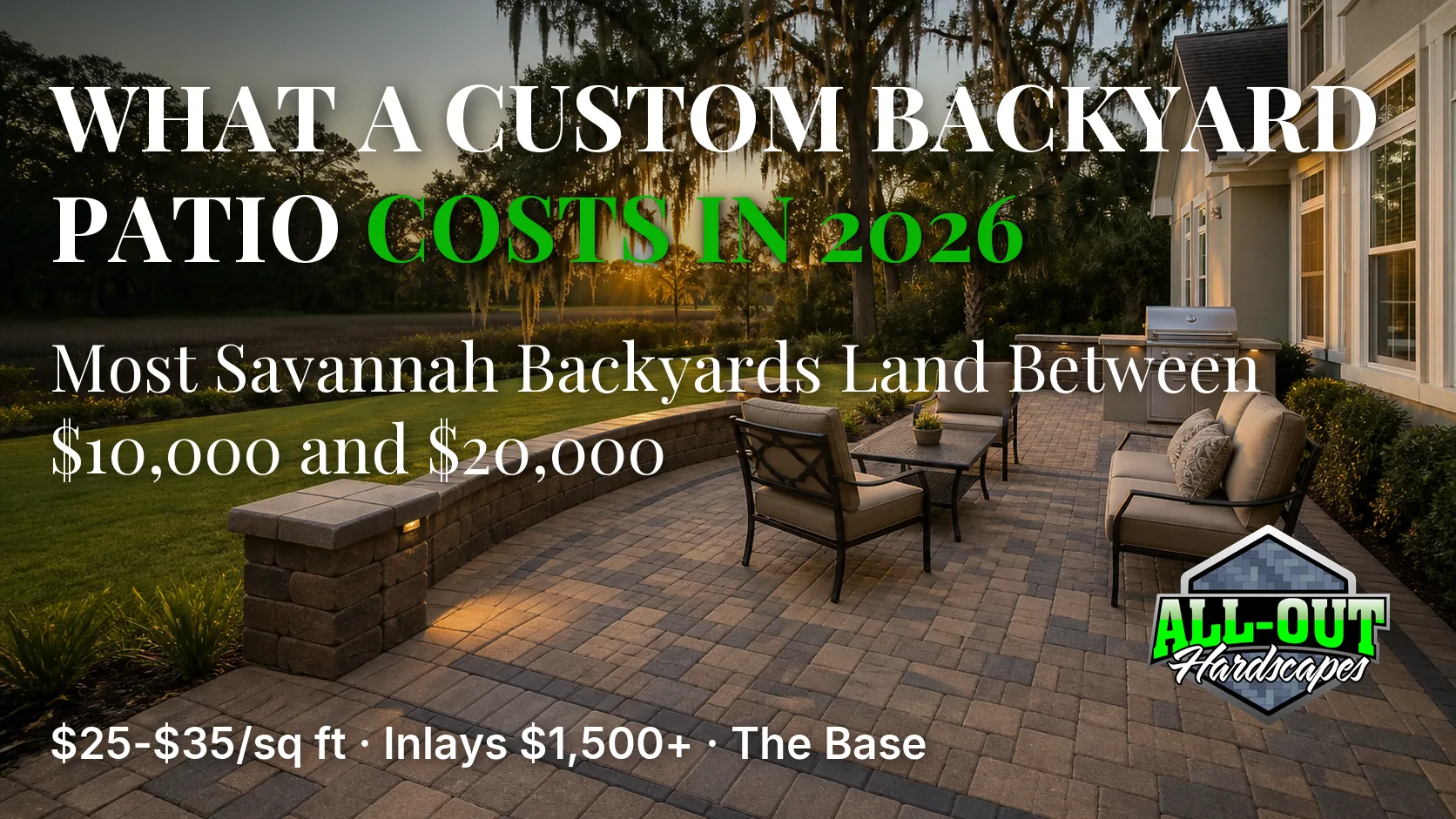
Read MoreMost Savannah backyards land between $10,000 and $20,000 at $25-$35 a square foot. Inlays start around $1,500 — and the base you cannot see is where the money actually goes.
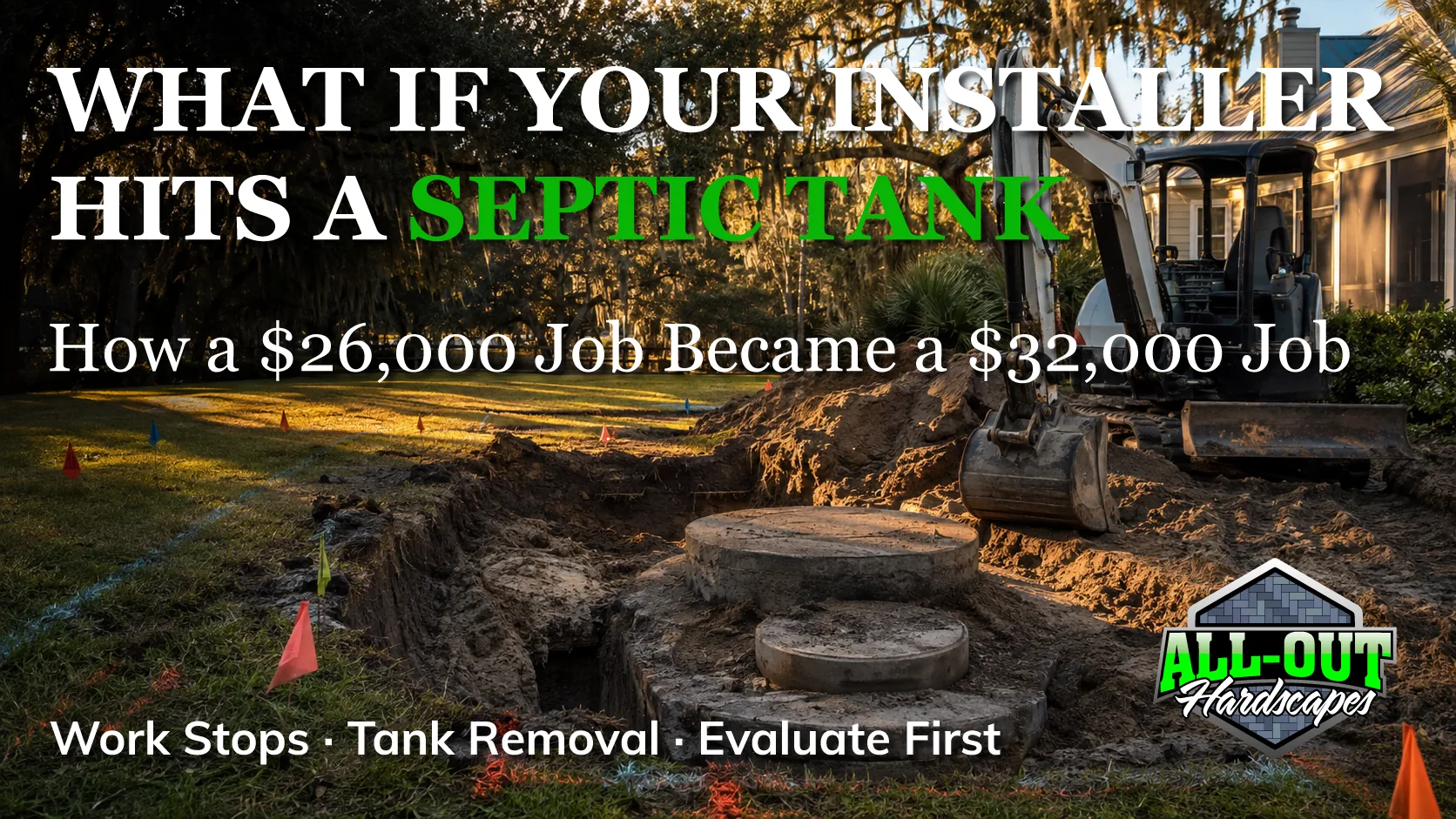
Read MoreA job quoted near $26,000 finished around $32,000 after an unknown septic tank turned up in the middle of the patio — which is why every schedule we hand over already has an extra week in it.
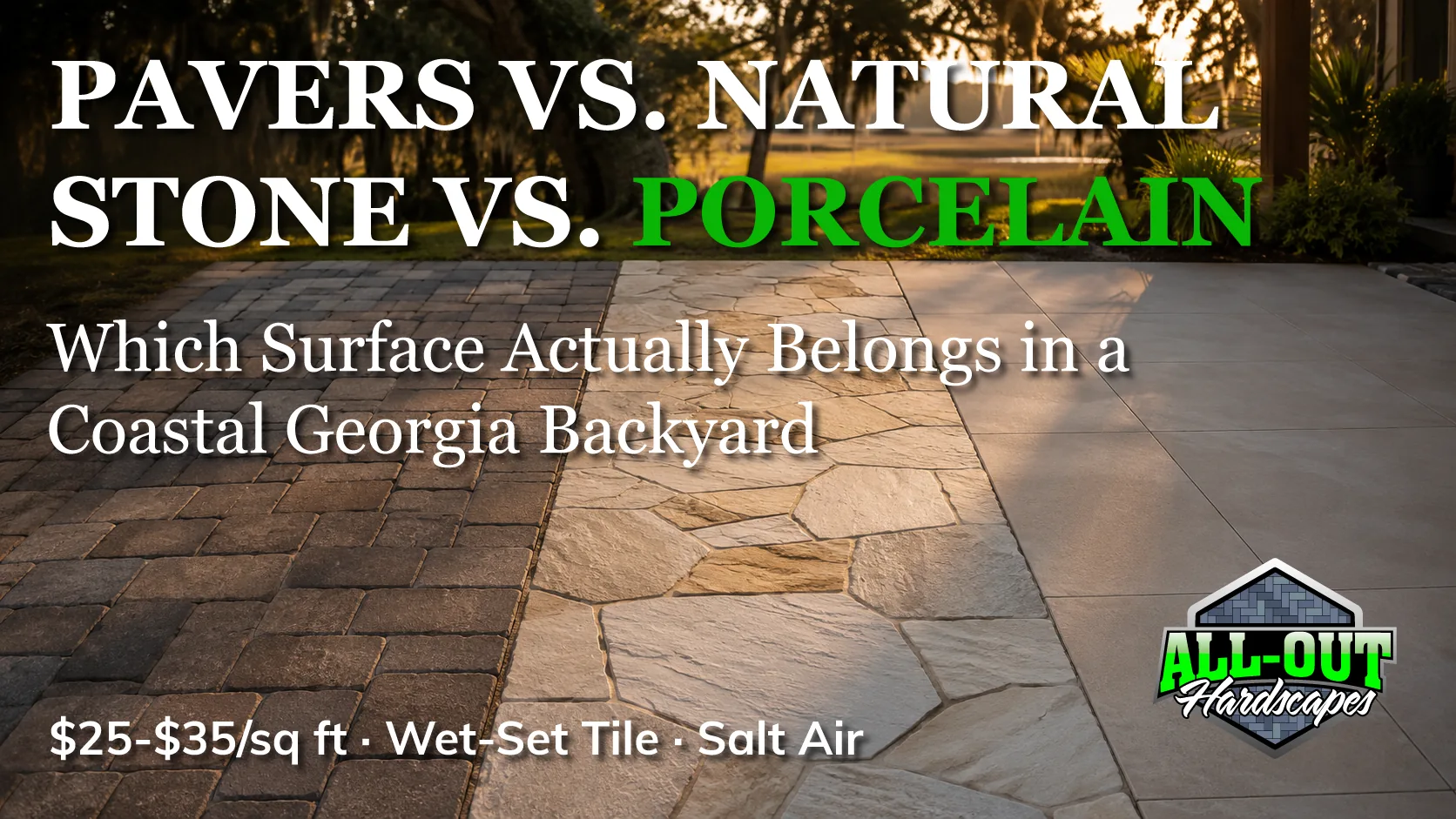
Read MorePavers and natural stone both land at $25-$35 a square foot and both drain through an open-graded base. Tile is the different animal — it has to be wet set over concrete.
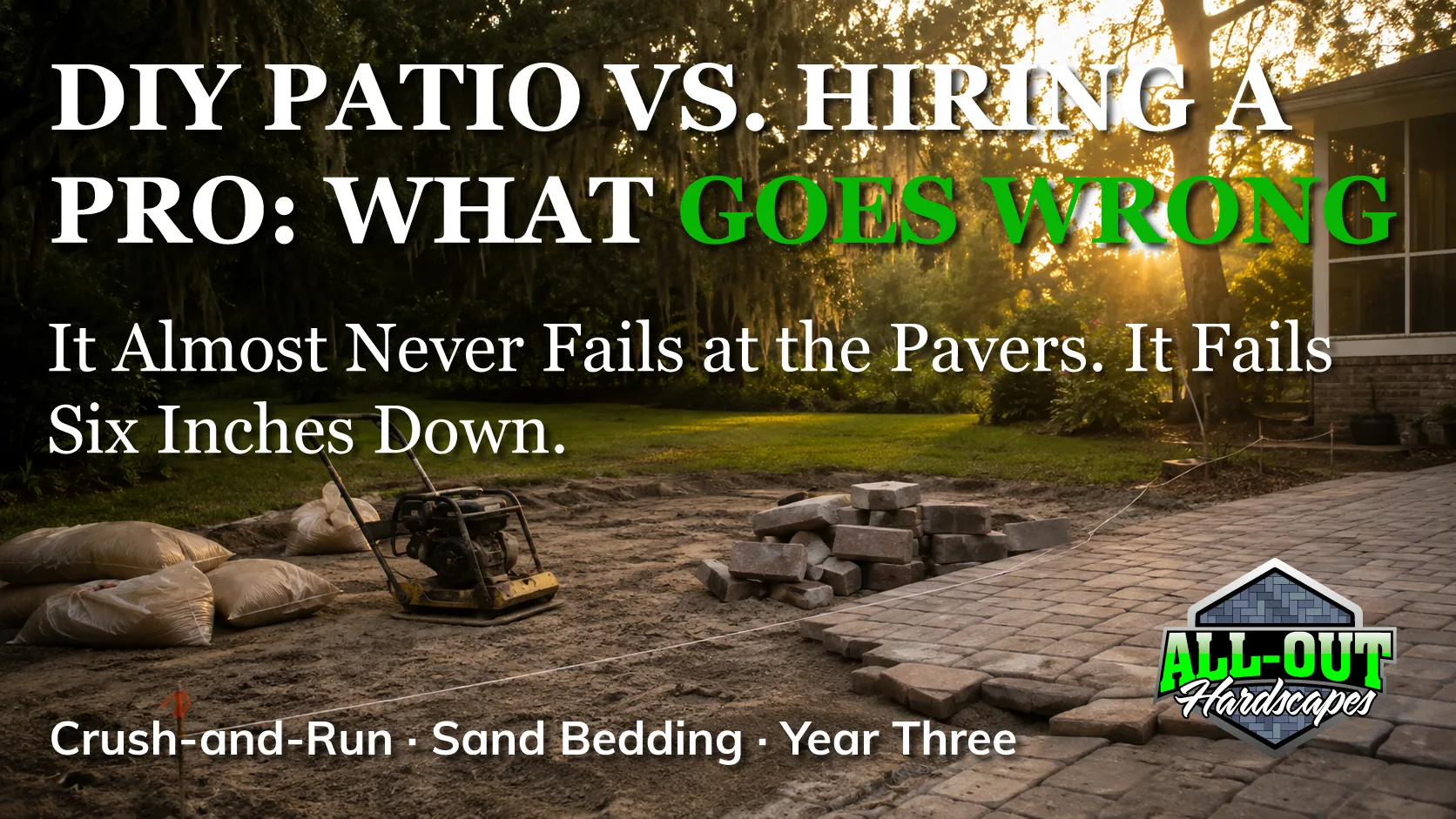
Read MoreA homeowner build almost never fails at the pavers. It fails 4 to 6 inches down, in the base — and you find out in year three when nothing sits flat anymore.
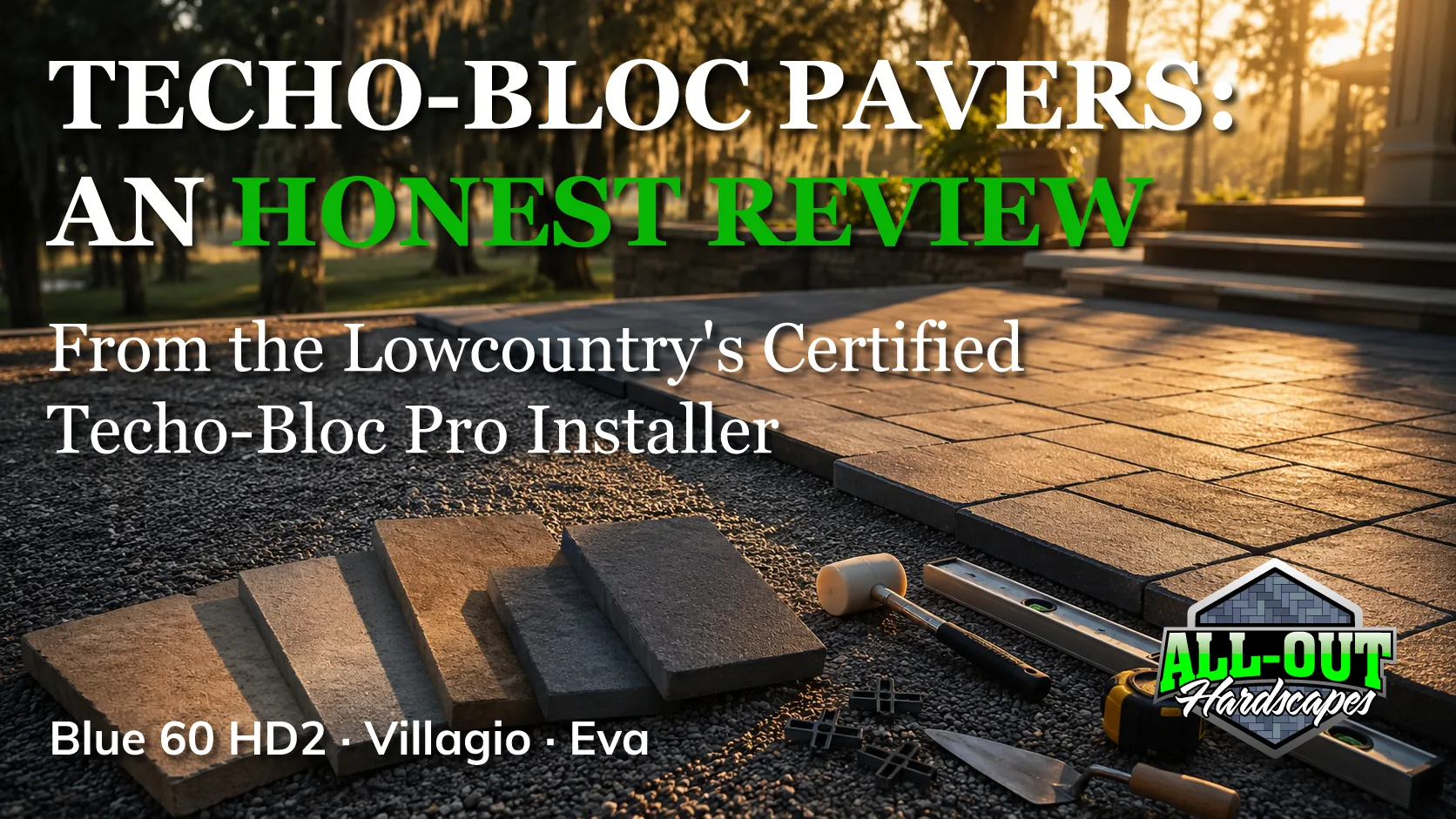
Read MoreBias on the table: we are the certified Techo-Bloc Pro here. Blue 60 HD2 is our most-installed paver, Villagio turns any radius without a cut, Eva is the budget line.
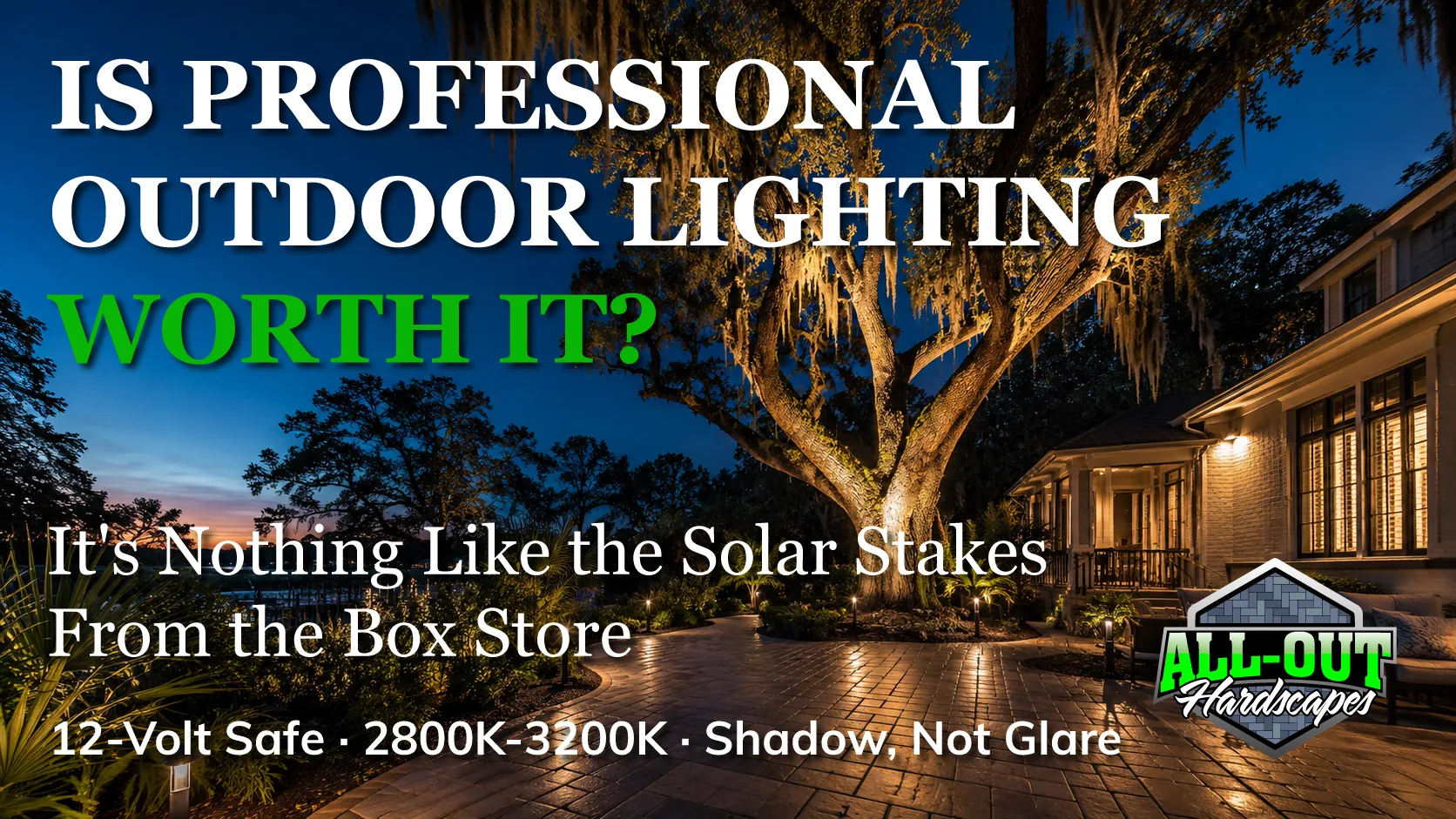
Read MoreIt hands you back four to eight hours a night on a patio you already paid for. A 12-volt system at 2800K-3200K flatters the house — solar stakes just light the ground.
Read MoreArt value is inlaid color, basketweave built from three paver sizes, checkerboard, a backyard laid out like Victory Lane — and half of it is the drainage you cannot see.
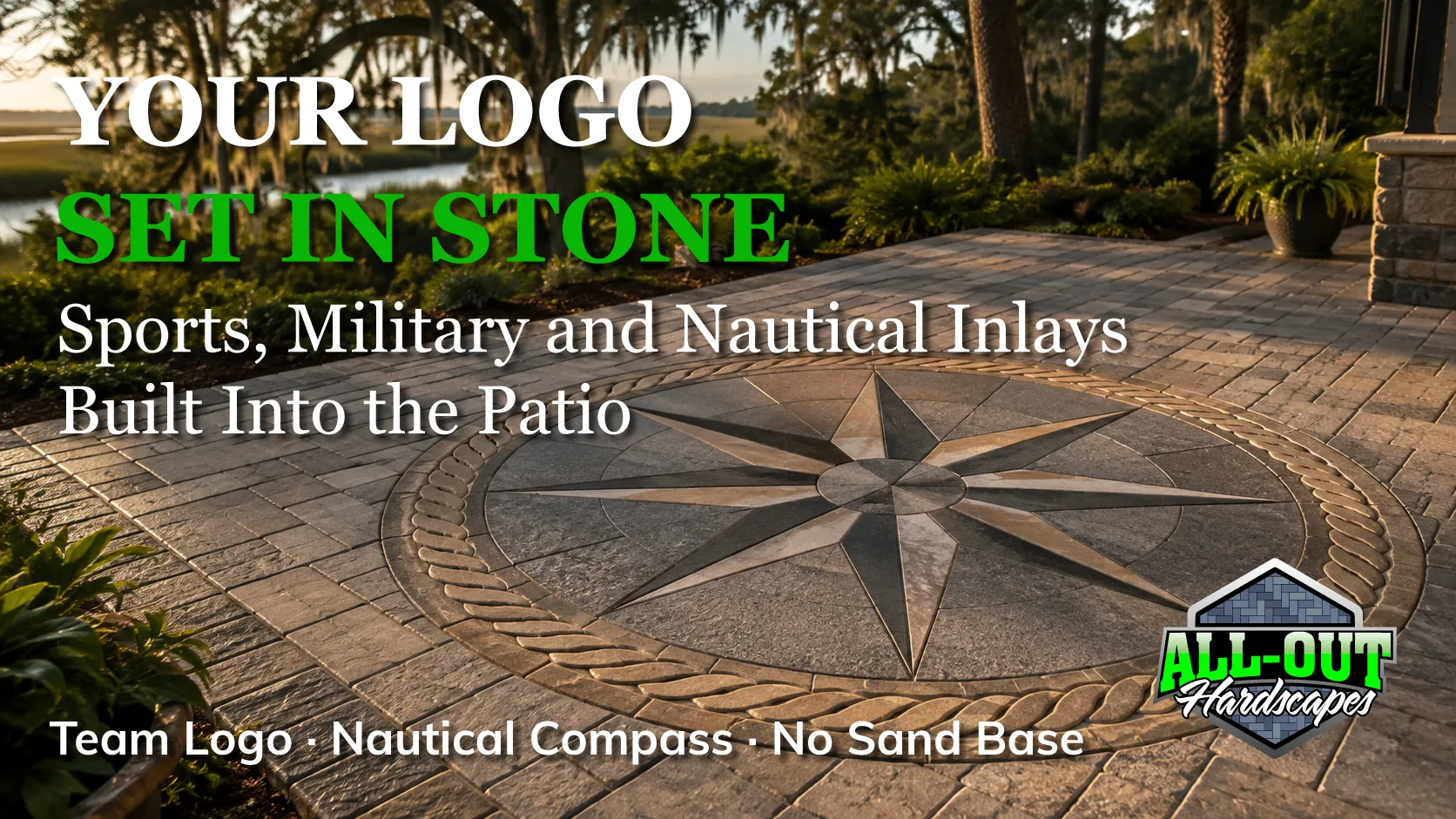
Read MoreA sports logo inlay runs about $1,500 and a full nautical compass about $2,500. On a $15,000 patio that is a small add — and it is the part everyone notices.
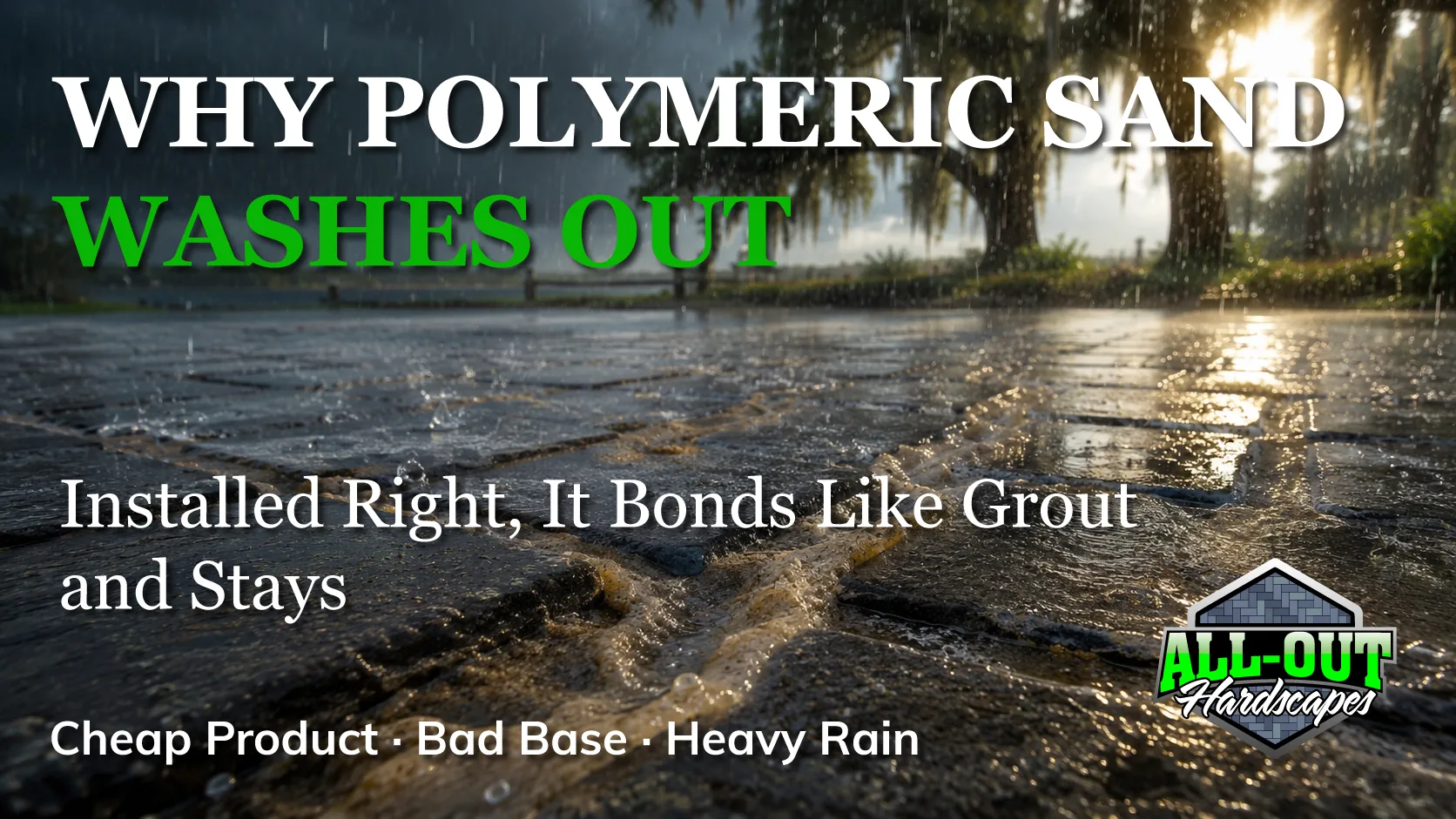
Read MoreInstalled right, polymeric sand bonds like grout and stays put. When it runs off in a downpour it is almost always cheap sand — or bedding sand escaping a bad base.
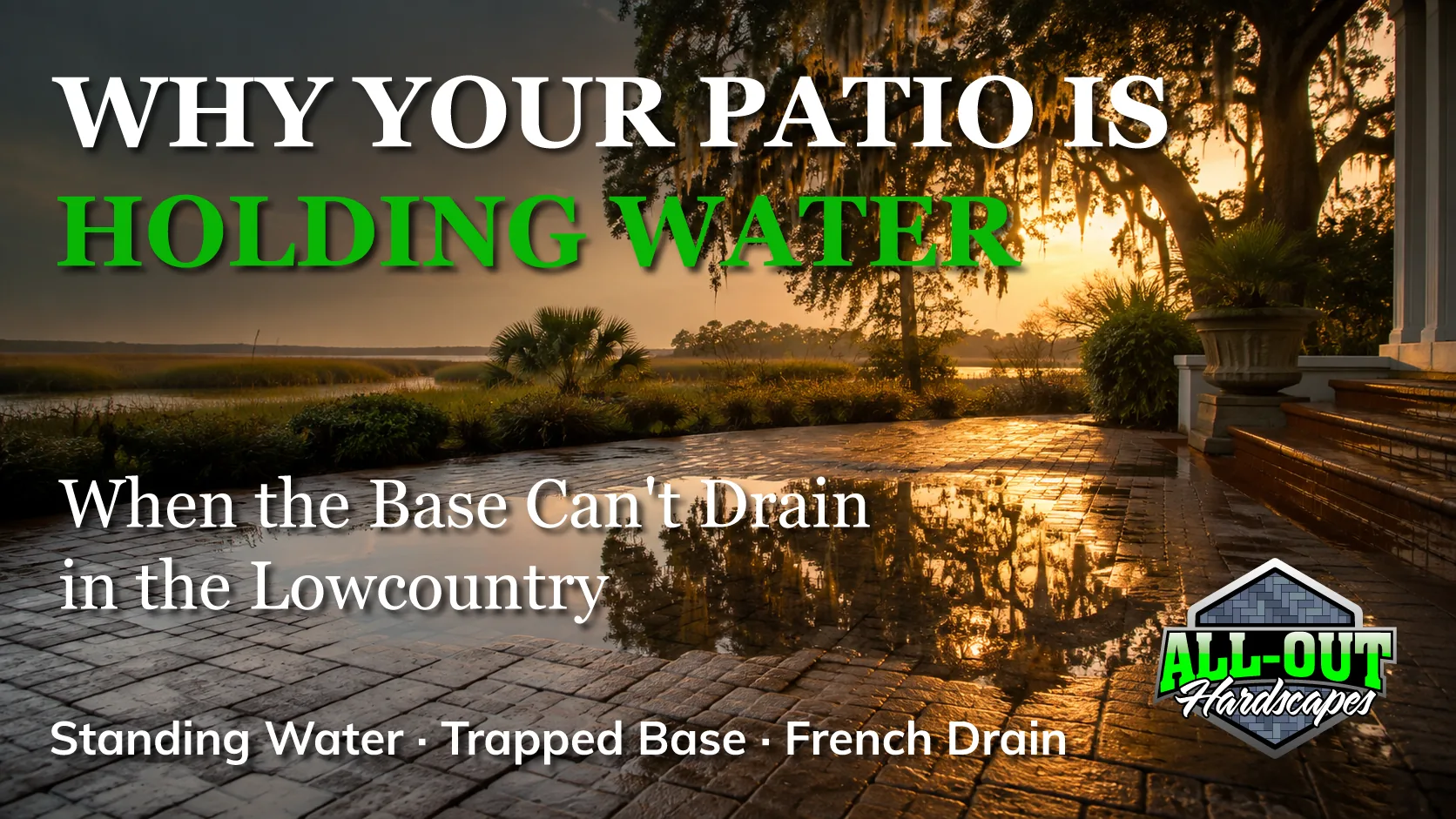
Read MoreWater does not sit on a patio for no reason — the base under it was never built to move water. Open stone drains like a French drain; sand on crush-and-run traps it.
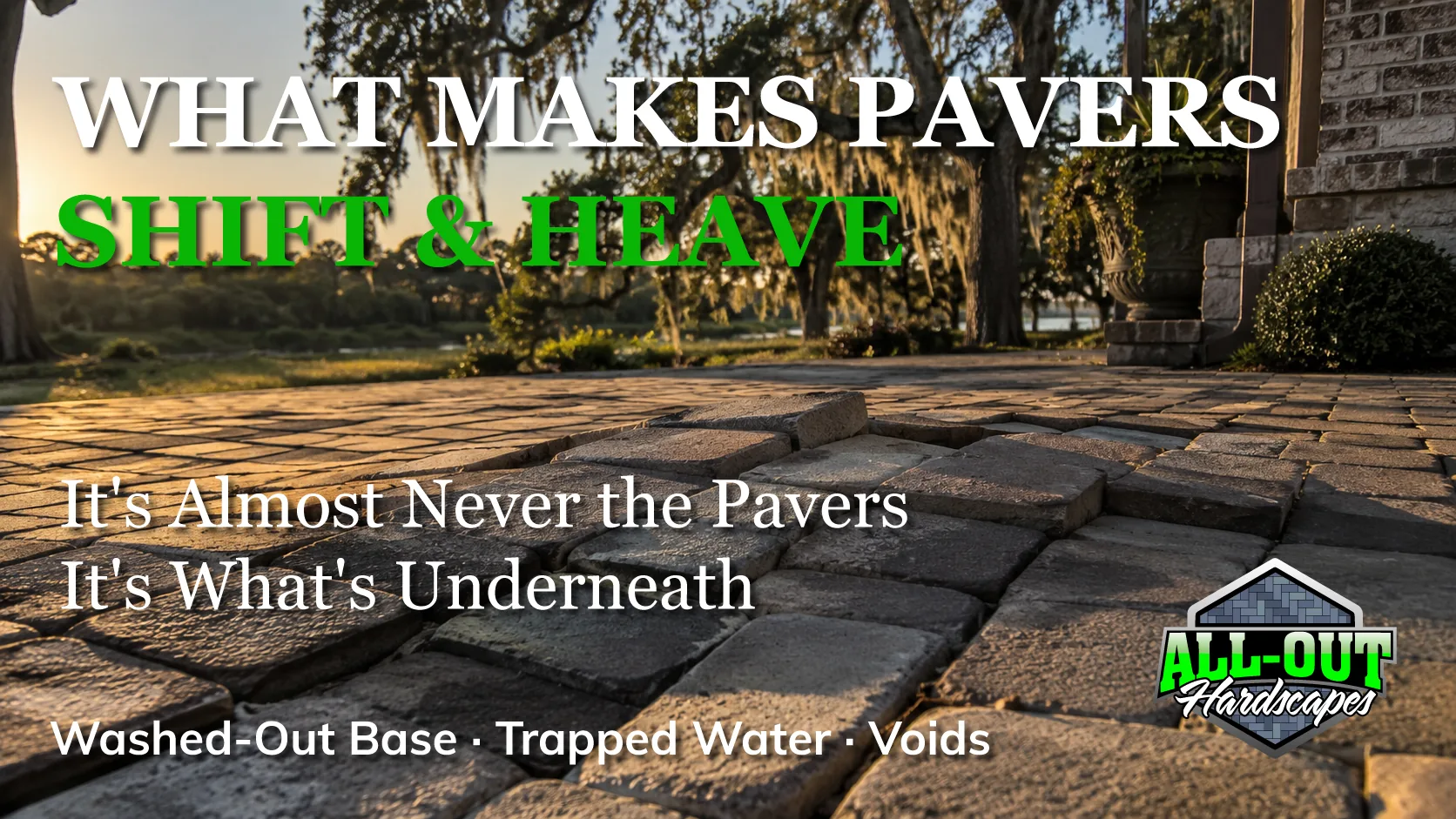
Read MoreIt is almost never the pavers — it is the sand bedding layer washing out from underneath them. In three to five years that carves voids and the surface starts to tilt.
Read MoreA real drainage base, polymeric joints, and edge restraint — all three are invisible on day one, which is exactly why cheap installs leave them out.
Read MoreWeed seeds blow in from above, not up from below — so they can only grow if there is dirt in the joints. A clean open-graded base and bonded joints starve them out.
Read MoreOne works like grout and locks the joints together; the other washes out in the first real Lowcountry downpour. The swap saves about $1,200 — and it shows within a season.
Read MoreA ground-level paver patio usually does not need a permit — but retaining walls over 18 inches do, and the historic district plays by its own rules.
Read MoreA landscaper lays pavers between mowing jobs; a certified installer builds the base for a living — and in our sandy soil that difference shows up by year three.
Read MoreBase depth, joint sand, edge restraint, and drainage — the questions that tell you in minutes whether you are hiring a craftsman or a good salesman.
Read MoreThe cheapest quote is almost always cheap because of what’s missing under the pavers — the base, the compaction, the polymeric sand. How to tell a real deal from a future repair bill.
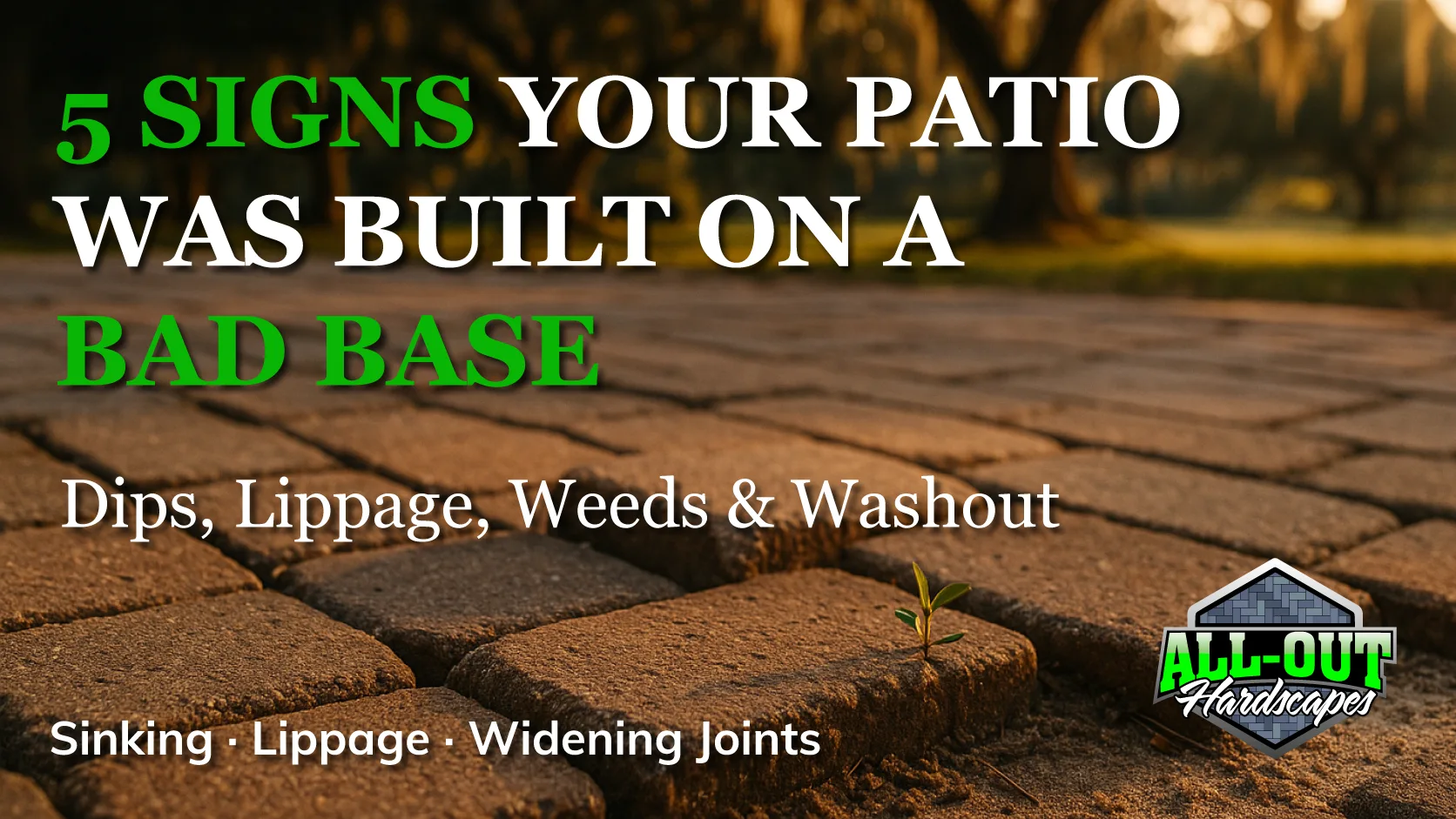
Read MoreDips, lippage, widening joints, weed lines, and washed-out sand after rain — the five tells that the base underneath was rushed, and what each one means for the patio’s future.
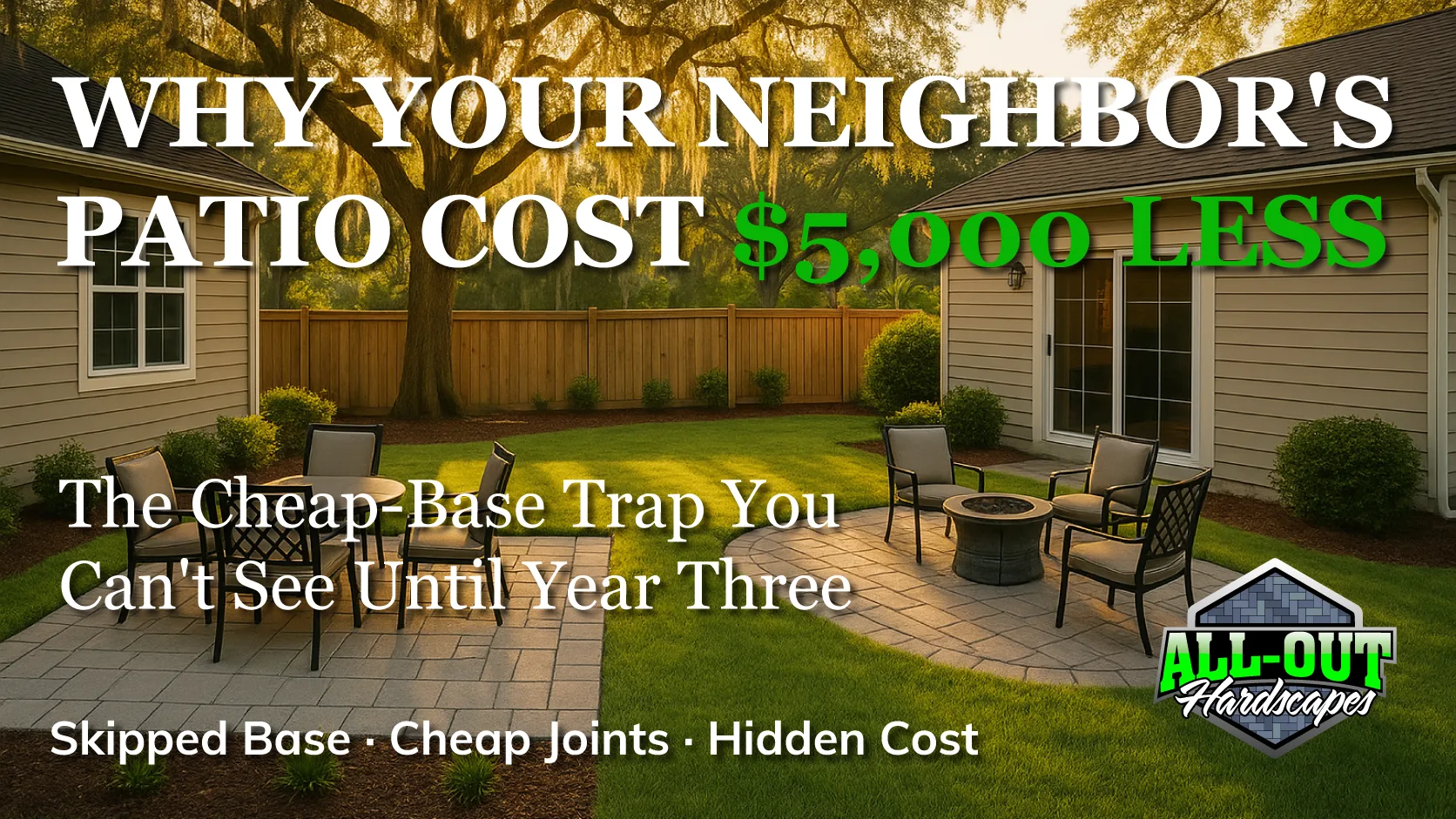
Read MoreWhen one quote comes in thousands cheaper, the difference is usually buried underground — the skipped stone base and polymeric sand you can’t see. The cheap-base trap, explained.
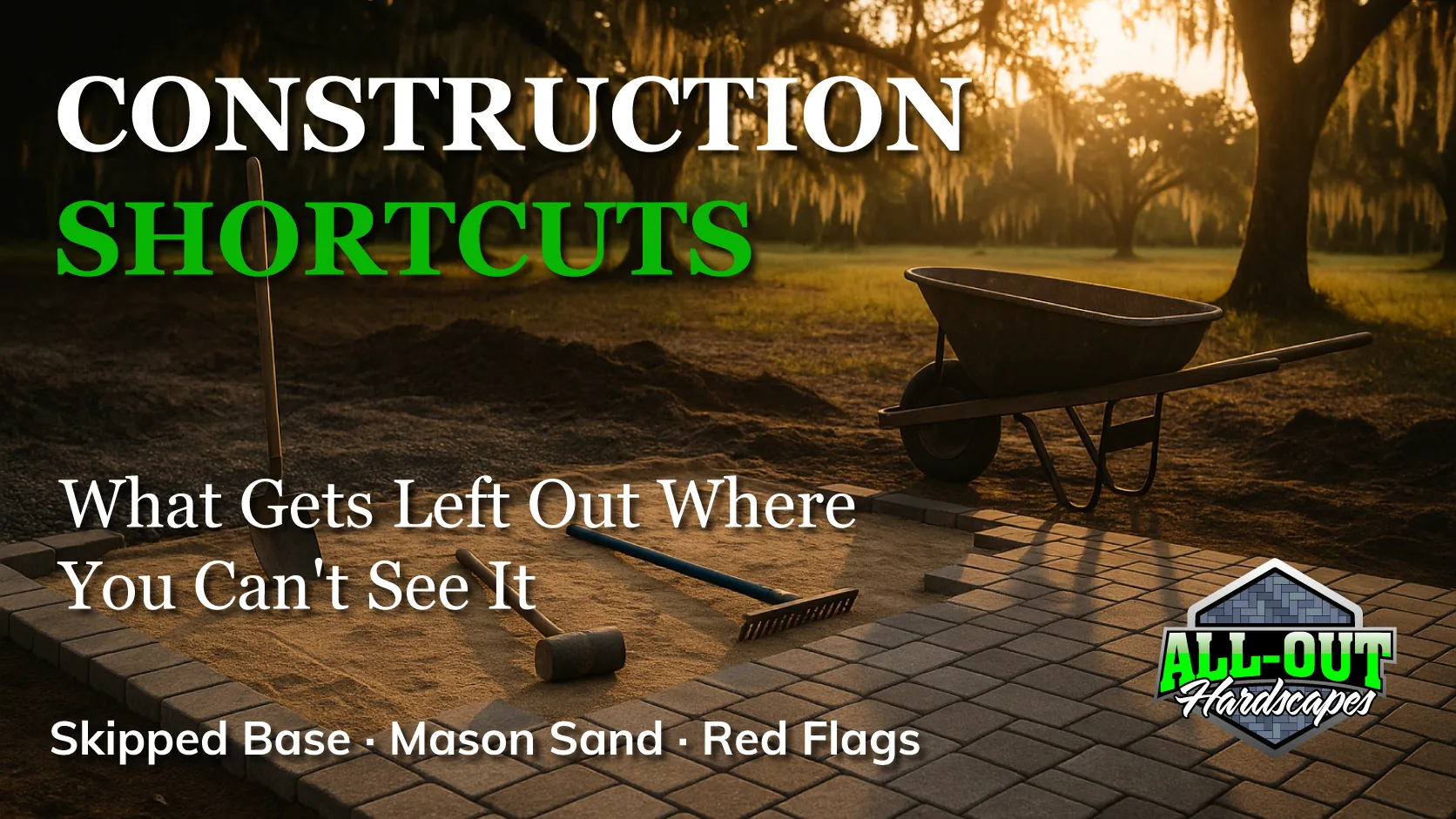
Read MoreHow a quote comes in cheap — the skipped stone base, mason sand joints, shallow digging, and light compaction you can’t see, and how to catch them before you sign.
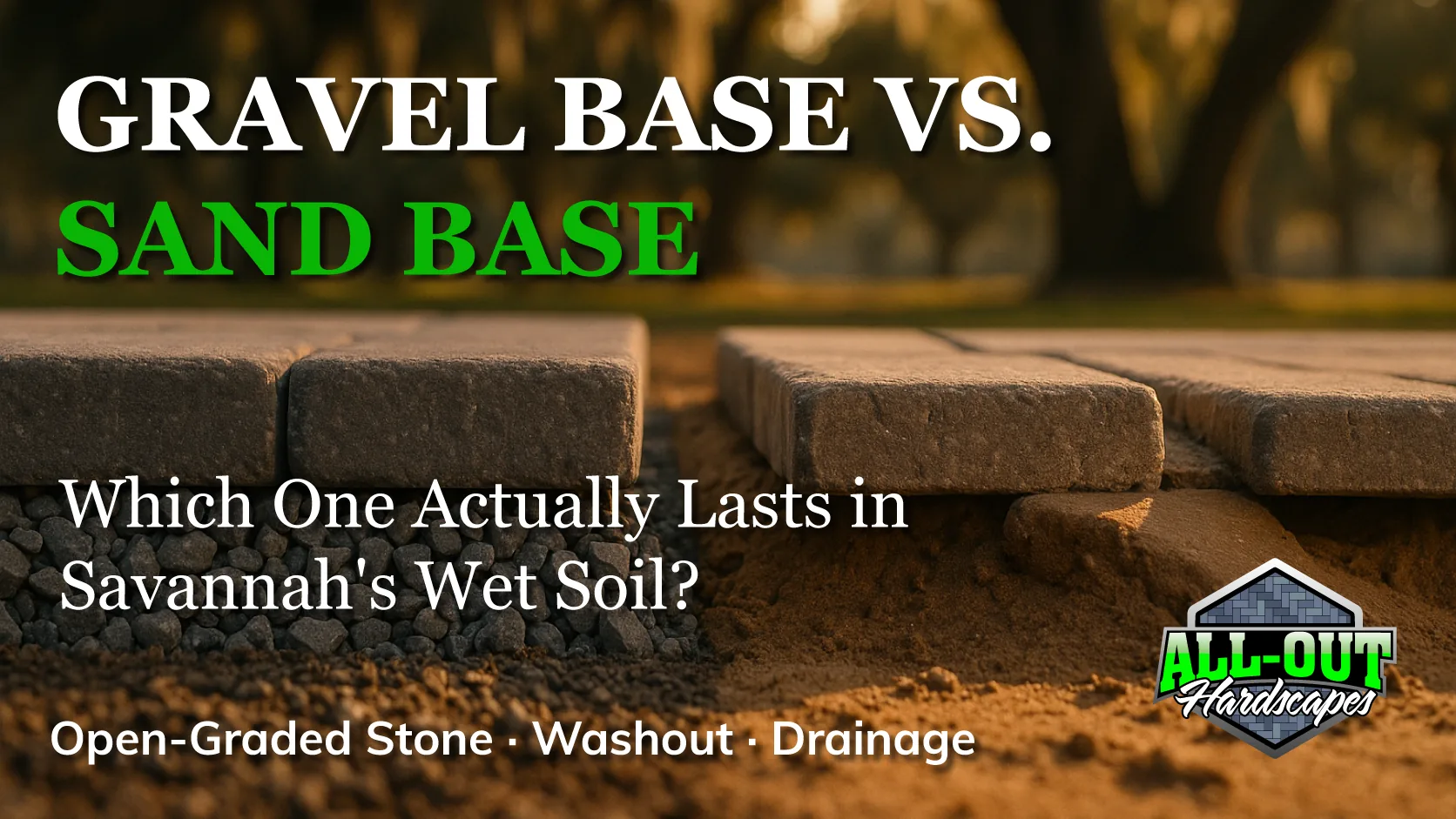
Read MoreThey look identical the day the patio is finished — then split apart underground. Why sand washes out in a few wet seasons here and an open-graded gravel base drains and stays flat.
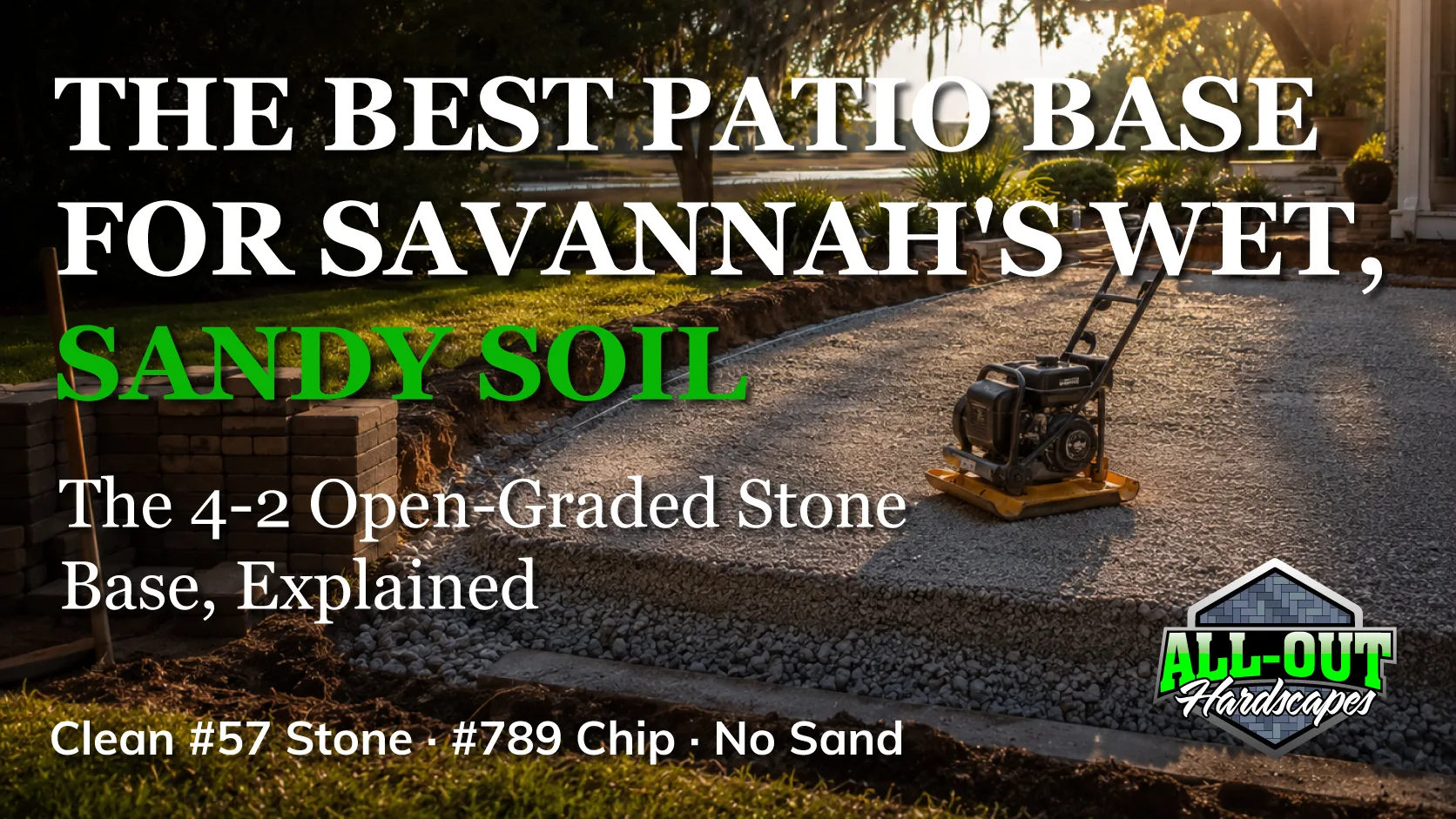
Read MoreThe 4-2 open-graded stone base explained — four inches of clean #57 stone and two inches of #789 chip, no sand, so the patio drains like a French drain and stays flat for decades.
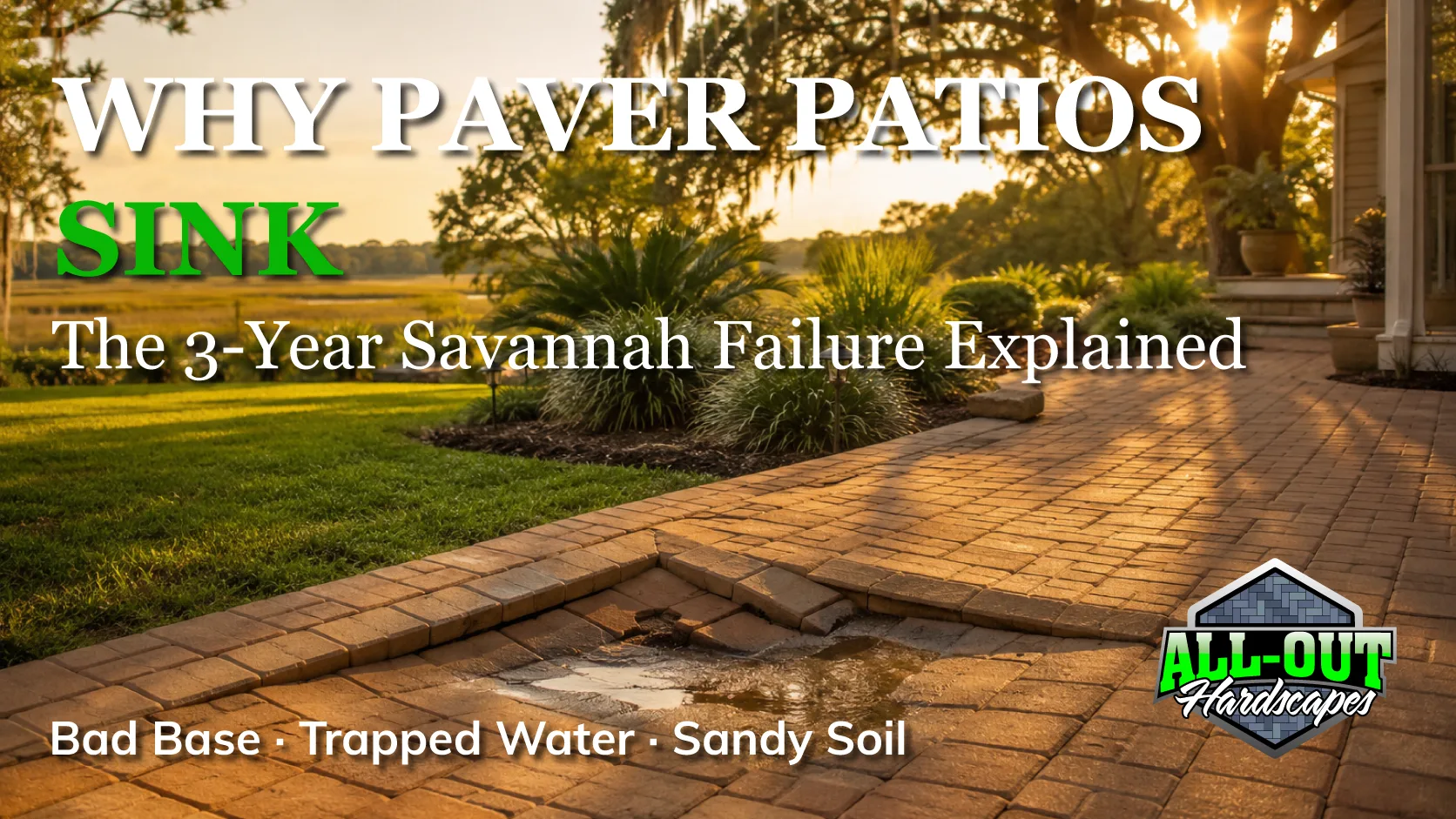
Read MoreIt is almost never the pavers — it is the base underneath. Here is what happens under a sinking patio, why Savannah’s soil makes it worse, and how an open-graded stone base keeps a patio flat for decades.
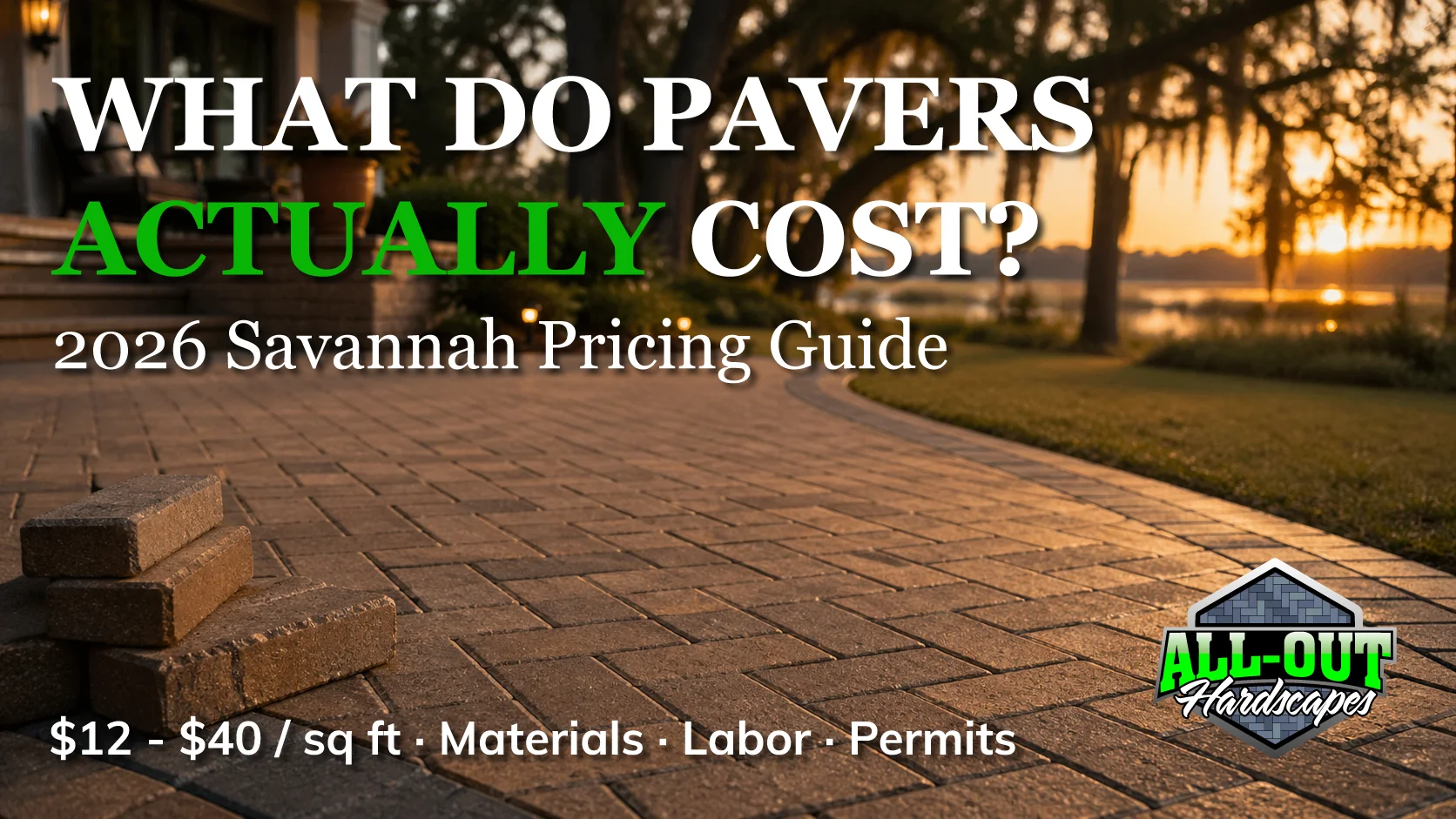
Read MoreProfessional paver installation in Savannah costs $12 to $40 per square foot in 2026. For a standard 300 sq. ft. patio, expect $3,600 to $9,000. We break down materials, labor, permits, and what drives the price.
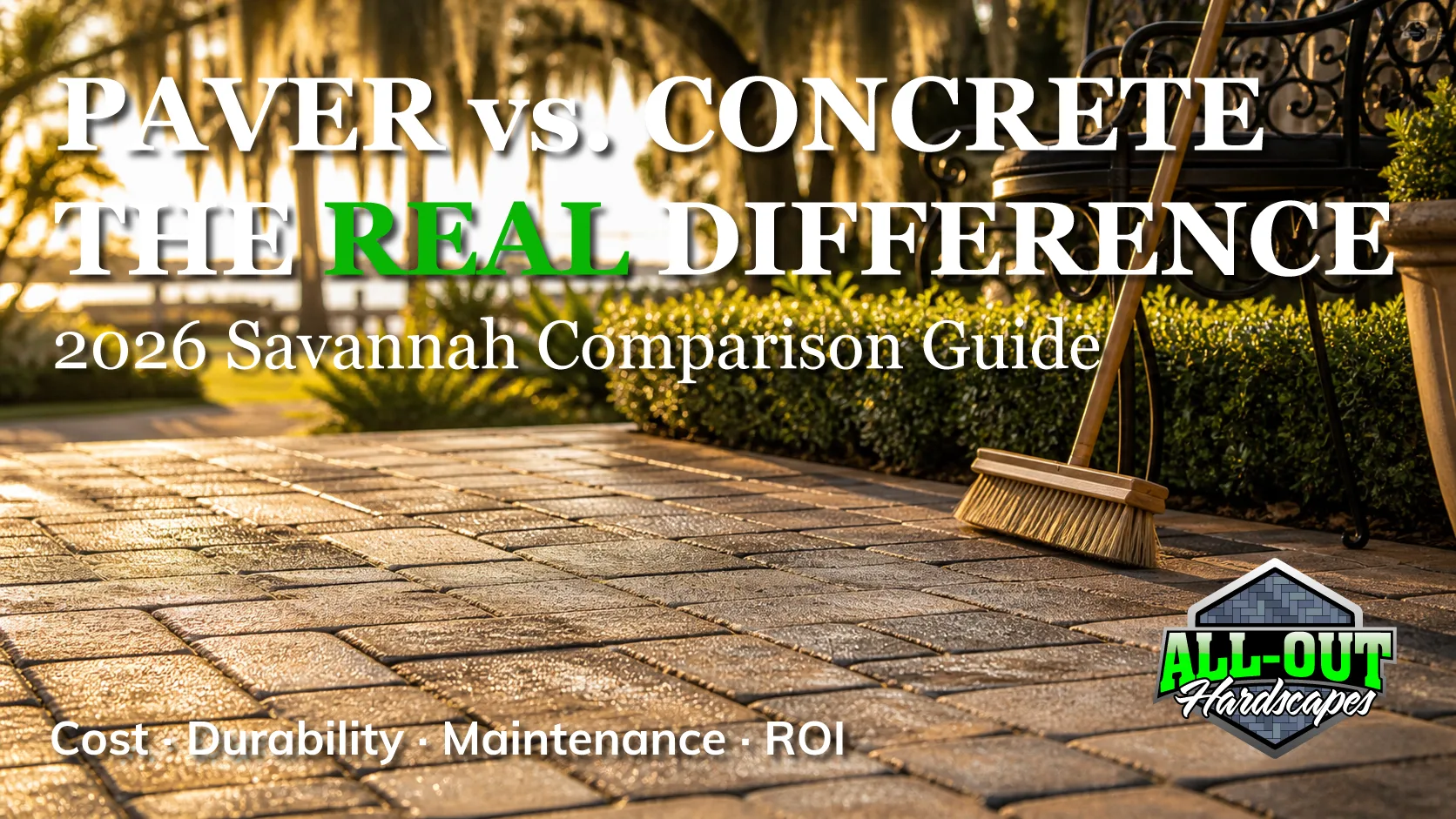
Read MoreAn honest comparison of cost, durability, maintenance, heat performance, stormwater compliance, and ROI — analyzed specifically for the Savannah and Low Country climate.
Read MoreLeaning, cracking, bulging, efflorescence, and sinkholes — the five warning signs every Savannah homeowner needs to know, plus why brick masonry outperforms concrete in the Lowcountry.
Read MoreCleaning, sealing, joint sand, stain removal, and seasonal care — everything you need to keep your paver patio looking perfect in the Coastal Lowcountry.
Read More